The Cadillac Ranch Texas: Where Art, Graffiti, and History Collide
Table of Contents
- The Complete Overview of the Cadillac Ranch Texas
- Historical Background and Evolution
- Core Mechanisms: How It Works
- Key Benefits and Crucial Impact
- Major Advantages
- Comparative Analysis
- Future Trends and Innovations
- Conclusion
- Comprehensive FAQs
- Q: Can I still paint the Cadillacs at the Cadillac Ranch Texas?
- Q: How much does it cost to visit the Cadillac Ranch Texas?
- Q: Why were 1949 Cadillacs chosen for the installation?
- Q: Is the Cadillac Ranch Texas open year-round?
- Q: Are there guided tours or educational programs at the ranch?
- Q: What happens when the Cadillacs completely rust away?
- Q: Can I take graffiti off the Cadillacs as a souvenir?
- Q: Is the Cadillac Ranch Texas accessible for people with disabilities?
- Q: How do I get to the Cadillac Ranch Texas from Amarillo?
- Q: Are there any restrictions on photography at the ranch?
- Q: What’s the best time of year to visit the Cadillac Ranch Texas?
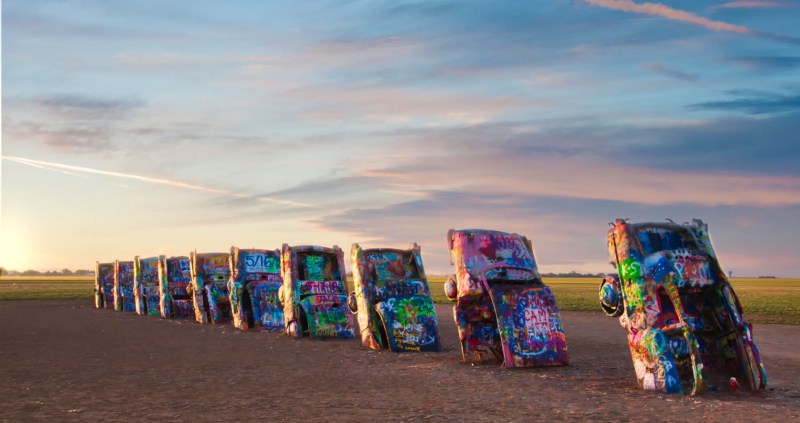
The Cadillac Ranch Texas is more than a roadside attraction—it’s a living monument to rebellion, creativity, and the passage of time. Nestled outside Amarillo along U.S. Highway 60, this surreal landscape features ten 1949 Cadillacs half-buried nose-first in the earth, their chrome grills facing the sky like sentinels of a bygone era. Since its creation in 1974, the installation has become a pilgrimage site for artists, photographers, and curious travelers, its rusting metal bodies now covered in layers of spray paint, each stroke a testament to the ever-evolving dialogue between art and the public.
What makes the Cadillac Ranch Texas uniquely compelling is its dual nature: a tribute to American automotive history and a canvas for global street art. Unlike traditional museums, where art is preserved behind glass, this installation thrives on impermanence. Visitors are encouraged to contribute their own mark—though rules now limit participation to designated days—creating a collaborative masterpiece that shifts with each generation. The ranch’s rusted, graffiti-adorned bodies tell a story of decay and renewal, a metaphor for how culture itself is constantly rewritten.
The ranch’s origins trace back to a 1974 art project by Chip Lord, Hudson Marquez, and Bas Jan Ader, members of the radical art collective Ant Farm. Their goal was to create a piece that would challenge perceptions of art, ownership, and permanence. The Cadillacs—salvaged from a junkyard—were chosen for their symbolic weight: symbols of American excess, now repurposed as humble, weather-beaten relics. The installation’s location, on a stretch of highway known for its stark, flat landscapes, was deliberate. Here, in the heart of West Texas, the ranch became a counterpoint to the region’s oil-boom aesthetics, a quiet rebellion against the commercialized American Dream.

The Complete Overview of the Cadillac Ranch Texas
The Cadillac Ranch Texas is a paradox—a place where high art and lowbrow culture intersect, where the ephemeral meets the enduring. Its design is deceptively simple: ten 1949 Cadillac Fleetwood sedans, each weighing around 2,000 pounds, were buried nose-down in a straight line, spaced 12 feet apart. The choice of 1949 wasn’t arbitrary; it marked the year the U.S. entered the Cold War era, a time of both technological optimism and cultural upheaval. The Cadillacs, once symbols of luxury, now serve as humble vessels for public expression, their once-polished surfaces now marred by time, weather, and the hands of countless artists.What sets the Cadillac Ranch Texas apart from other public art installations is its interactive legacy. Originally, visitors were free to spray-paint the cars at any time, leading to a rapid accumulation of graffiti that transformed the piece into a living, breathing entity. Over time, the Amarillo Convention & Visitors Bureau established guidelines to preserve the installation’s integrity while still allowing public participation—now restricted to the first Sunday of each month. This rule change reflects a broader tension: how to balance accessibility with conservation in a piece that thrives on impermanence.
Historical Background and Evolution
The Cadillac Ranch Texas emerged from the countercultural ferment of the 1970s, a period when artists increasingly questioned the boundaries of their medium. Ant Farm, the collective behind the project, was known for its provocative, often illegal works—like their famous Media Burn in 1975, where they incinerated a live TV broadcast. The ranch was their most enduring creation, a piece designed to age gracefully while inviting the public to participate in its evolution. The Cadillacs were acquired for $2,500 from a junkyard in Amarillo, their once-glossy exteriors already showing signs of rust, a harbinger of the installation’s future.The ranch’s evolution has been shaped by both natural decay and human intervention. In its early years, the cars were painted by anyone who passed by, leading to a chaotic but vibrant accumulation of colors and styles. By the 1990s, the Amarillo community began to take a more active role in its preservation, organizing events like Cadillac Days to celebrate the installation’s cultural significance. Today, the ranch is recognized as a registered historic site by the Texas Historical Commission, a rare honor for a piece of land art. Its survival is a testament to the power of grassroots stewardship—local volunteers now monitor the site, ensuring that the ranch remains a place of artistic freedom rather than commercial exploitation.
Core Mechanisms: How It Works
The Cadillac Ranch Texas operates on two levels: as a physical installation and as a social experiment. Mechanically, the buried Cadillacs are anchored in place by a network of rebar and concrete, preventing them from shifting as the earth around them erodes. The soil, a mix of clay and sand typical of West Texas, accelerates the rusting process, ensuring that the cars will eventually disappear entirely—estimated to take another 50–100 years. This deliberate decay is central to the piece’s concept; the ranch is meant to be temporary, a fleeting monument to the passage of time.The social mechanism is equally critical. The ranch’s rules—particularly the restriction on painting to the first Sunday of each month—are designed to maintain a sense of order while preserving the installation’s democratic spirit. During these events, visitors are provided with spray paint and stencils, though the Amarillo Convention & Visitors Bureau reserves the right to remove any graffiti deemed inappropriate. This balance between control and freedom is what keeps the ranch relevant. It’s not just a static sculpture; it’s a dynamic conversation between the artists who paint it and the community that engages with it.
Key Benefits and Crucial Impact
The Cadillac Ranch Texas has had a ripple effect far beyond its physical boundaries. For Amarillo, it’s become a cultural anchor, drawing over 100,000 visitors annually and injecting millions into the local economy. The ranch’s unique blend of art, history, and automotive nostalgia has positioned it as a must-see destination, rivaling even the nearby Big Texan Steak Ranch. For artists, it’s a rare opportunity to contribute to a piece that will outlast them, their work preserved not in a gallery but in the collective memory of the public.Beyond its economic and artistic value, the ranch serves as a powerful metaphor for the cyclical nature of culture. The Cadillacs, once symbols of American prosperity, now bear the marks of time and human creativity, much like the societies that produce them. This duality—decay and renewal—resonates with visitors, many of whom leave with a deeper appreciation for the impermanence of all things.
"The Cadillac Ranch is a place where the past and future collide. It’s not just about the cars; it’s about the idea that art belongs to everyone, and that every mark we leave behind is part of a larger story." — Hudson Marquez, Original Ant Farm Member
Major Advantages
- Global Recognition: The Cadillac Ranch Texas is one of the most photographed public art installations in the U.S., featured in publications like The New York Times and Vogue. Its iconic status has made it a benchmark for street art and land art movements worldwide.
- Cultural Preservation: As a registered historic site, the ranch is protected under Texas law, ensuring its longevity while allowing controlled public interaction. This rare designation bridges the gap between temporary art and permanent heritage.
- Economic Boost: The installation generates significant tourism revenue for Amarillo, supporting local businesses from hotels to souvenir shops. Events like Cadillac Days further amplify its economic impact.
- Artistic Democracy: Unlike traditional museums, the ranch democratizes art-making. Anyone can contribute, making it a rare space where high art and grassroots creativity intersect without gatekeeping.
- Educational Value: The ranch serves as an outdoor classroom, teaching visitors about automotive history, graffiti culture, and the philosophy of land art. School groups and art students frequently visit to study its evolution.

Comparative Analysis
| Feature | Cadillac Ranch Texas | Similar Installations |
|---|---|---|
| Primary Medium | Buried vintage Cadillacs + public graffiti | Most use natural materials (e.g., Spiral Jetty uses rocks/salt) or static objects (e.g., The Wave uses concrete). |
| Public Interaction | Controlled painting events (first Sunday monthly) | Many installations (e.g., Christ the Redeemer) are non-interactive; others (e.g., The Kiss in Philadelphia) allow limited touch. |
| Lifespan | Designed to decay over 50–100 years | Most land art is permanent (e.g., The Lightning Field), though some (e.g., The Dallas Balloon) are temporary. |
| Cultural Impact | Global street art icon; economic driver for Amarillo | Some installations (e.g., The Bean in Chicago) are tourist draws, but few blend art, history, and commerce as seamlessly. |
Future Trends and Innovations
As the Cadillac Ranch Texas approaches its 50th anniversary, its future hinges on balancing preservation with evolution. One potential trend is the integration of digital documentation—using 3D scanning and AI to catalog the graffiti layers, allowing future generations to "see" the ranch’s full history even as the physical cars disappear. Another innovation could be augmented reality (AR) tours, where visitors use their phones to overlay historical images or artist statements onto the current graffiti.The ranch’s legacy may also inspire similar projects worldwide, particularly in regions with strong automotive or industrial histories. Imagine a "Tesla Ranch" in Nevada or a "Volkswagen Graveyard" in Germany—installations that repurpose iconic vehicles as canvases for public expression. The key to sustaining the Cadillac Ranch Texas’s relevance will be its ability to adapt without losing its core ethos: a place where art is made by the people, for the people.
Conclusion
The Cadillac Ranch Texas endures because it defies easy categorization. It’s not just a piece of art; it’s a time capsule, a graffiti museum, and a testament to the power of community-driven creativity. Its rusted Cadillacs, now covered in layers of color and history, tell a story that transcends their original purpose. For locals, it’s a point of pride; for artists, it’s a blank canvas; for travelers, it’s a surreal detour off the highway.In an era where public spaces are increasingly commercialized, the ranch remains a rare example of art that belongs to everyone. Its future will depend on the same principles that created it: a willingness to embrace impermanence, to invite participation, and to let the story unfold—one spray-painted stroke at a time.
Comprehensive FAQs
Q: Can I still paint the Cadillacs at the Cadillac Ranch Texas?
A: Yes, but only during the first Sunday of each month, when the Amarillo Convention & Visitors Bureau hosts official painting events. Visitors are provided with spray paint and stencils, but inappropriate graffiti may be removed. Outside these dates, painting is prohibited to preserve the installation.
Q: How much does it cost to visit the Cadillac Ranch Texas?
A: The ranch is completely free to visit. However, donations are accepted to support its upkeep. Nearby attractions like the Amarillo Museum of Art may have admission fees, but the ranch itself requires no payment.
Q: Why were 1949 Cadillacs chosen for the installation?
A: The 1949 model was selected for its symbolic weight—it marked the year the U.S. entered the Cold War, a time of both technological advancement and cultural shift. The cars were also readily available in junkyards at the time, making them a practical choice for the project’s low budget.
Q: Is the Cadillac Ranch Texas open year-round?
A: Yes, the ranch is open 24/7, 365 days a year. However, access may be limited during extreme weather (e.g., blizzards) due to road conditions. The nearby visitor center and restrooms are typically open during daylight hours.
Q: Are there guided tours or educational programs at the ranch?
A: While there are no formal guided tours, the Amarillo Convention & Visitors Bureau offers brochures with historical context and a self-guided audio tour via their website. Local art schools and universities occasionally organize workshops or lectures at the ranch, especially during Cadillac Days in September.
Q: What happens when the Cadillacs completely rust away?
A: The ranch’s creators designed it to disappear over time, so no immediate plans exist to replace the cars. However, the Amarillo community has expressed interest in documenting the final stages of decay and potentially creating a new installation nearby to honor the original’s legacy.
Q: Can I take graffiti off the Cadillacs as a souvenir?
A: No, removing any part of the installation—including paint or metal—is strictly prohibited. The ranch is protected as a historic site, and vandalism (including theft of graffiti) can result in fines or legal action.
Q: Is the Cadillac Ranch Texas accessible for people with disabilities?
A: The ranch itself is fully accessible, with paved pathways leading to all ten cars. The nearby visitor center and restrooms are also wheelchair-friendly. However, the terrain can be uneven in some areas, so visitors with mobility concerns are advised to wear sturdy shoes.
Q: How do I get to the Cadillac Ranch Texas from Amarillo?
A: The ranch is located 10 miles east of Amarillo along U.S. Highway 60 (Exit 108). It’s clearly marked with signs, and the drive takes about 15–20 minutes from downtown. GPS coordinates for the visitor center are 35.2325° N, 101.8292° W.
Q: Are there any restrictions on photography at the ranch?
A: Photography is encouraged, but commercial use of images (e.g., selling photos without permission) may require a license. Drones are prohibited without prior approval from the Amarillo Convention & Visitors Bureau.
Q: What’s the best time of year to visit the Cadillac Ranch Texas?
A: Spring (March–May) and fall (September–November) offer pleasant weather and fewer crowds. September’s Cadillac Days festival includes live music, food trucks, and extended painting hours. Winter visits are possible but may involve icy conditions.
Leave a Comment
Comments are moderated before appearing. The data you submit is processed according to the Privacy Policy of Vetlife Archive.