Mastering the Best Wheat Farm Garden in Hypixel SkyBlock
Table of Contents
- Wheat Farming in Hypixel SkyBlock: Fundamentals and Basics
- Core Mechanics of Wheat Growth in SkyBlock
- Step-by-Step Initial Setup for a Wheat Farm
- Comparative Analysis of Wheat Varieties
- Calculating Return on Investment (ROI) for Wheat Farming
- Economic Role of Wheat in SkyBlock
- Beginner-Friendly Checklist for Launching a Wheat Farm
- Advanced Wheat Farming Techniques: Maximizing Efficiency and Profit
- Optimal Wheat Farm Layouts for Different Playstyles
- Automation Systems: Redstone, Pistons, and Observers
- Accelerating Wheat Growth: Bone Meal, Netherrack, and Synergistic Crops
- Profitability Comparison: Wheat vs. Early-Mid Game Crops
- Wheat Derivatives and Crafting: Beyond the Basic Farm
- Comprehensive Wheat-Based Crafting Table
- Best-Selling Wheat Derivatives and Tiered Recommendations
- Crafting High-Value Wheat Derivatives: Step-by-Step Guides
- Economic and Strategic Considerations for Wheat Farming in Hypixel SkyBlock
- Historical Price Trends and Market Dynamics
- Cost-Benefit Analysis Across SkyBlock Seasons
- Bulk-Buying and Storage Strategies
- Wheat in Broader SkyBlock Strategies
- Wheat as a Trade Good in the Player Economy
- Creative and Aesthetic Wheat Farms: Designing Visually Stunning Layouts in Hypixel SkyBlock
- Design Principles for Visually Cohesive Wheat Farms
- Case Studies: Iconic Wheat Farm Designs from Top SkyBlock Players
- Integrating Functionality into Aesthetic Designs
- Biome and Terrain Adaptations for Wheat Farms
- Troubleshooting and Optimizing Wheat Farms: Common Issues and Solutions
- Diagnostic Checklist for Wheat Farm Problems
- Securing Wheat Farms Against Griefing and Automated Attacks
- Adapting Wheat Farms to SkyBlock Updates and Version Changes
- Migrating Wheat Farms Between SkyBlock Worlds
- Quick Fixes Table for Wheat Farm Issues
In the competitive economy of Hypixel SkyBlock, where every block and resource holds potential profit, wheat farming emerges as a cornerstone for players seeking stability and growth. Unlike transient trends, wheat remains a reliable staple—its versatility spanning from basic bread to high-value enchanted derivatives. Yet, mastering the best wheat farm garden demands more than planting seeds; it requires strategic foresight, efficiency in automation, and an understanding of market dynamics that shift with each SkyBlock season.
From the early-game grind of gathering seeds to the end-game optimization of automated harvests, wheat farming bridges the gap between survival and prosperity. This guide dissects the fundamentals—growth mechanics, ROI calculations, and crop comparisons—while uncovering advanced techniques to maximize yield and profitability. Whether you’re a beginner setting up a modest plot or a seasoned player scaling multi-layered farms, the key lies in balancing functionality with adaptability, ensuring your wheat garden thrives amid SkyBlock’s ever-evolving challenges.

Wheat Farming in Hypixel SkyBlock: Fundamentals and Basics

Wheat farming stands as one of the most accessible yet profitable early-game activities in Hypixel SkyBlock, serving as a cornerstone for players transitioning from survival to economic dominance. Unlike traditional Minecraft, SkyBlock’s wheat mechanics introduce unique variables—such as block-specific growth, Netherrack dependencies, and tiered wheat varieties—that demand strategic planning. Mastery of these fundamentals ensures sustainable resource generation, from bread for daily needs to high-value Golden Wheat for late-game trades. This section dissects the core mechanics, setup requirements, and optimization techniques to maximize efficiency, while addressing pitfalls that hinder beginners.
Core Mechanics of Wheat Growth in SkyBlock
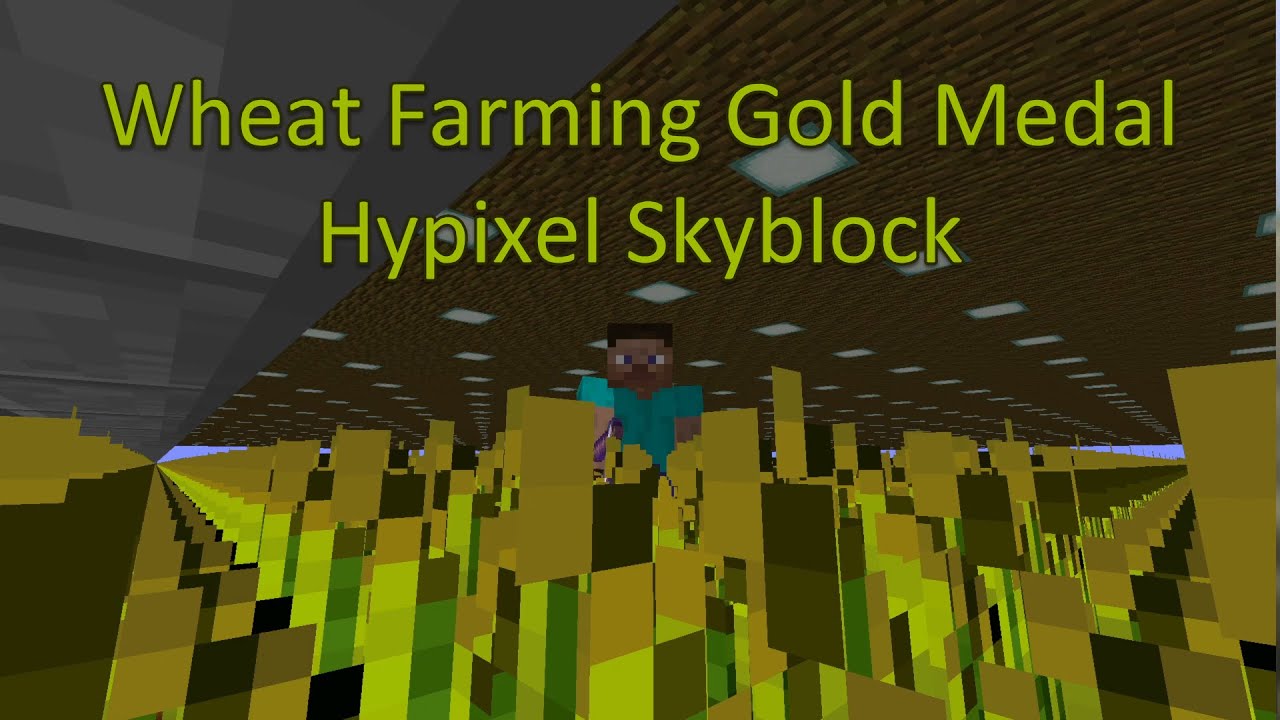
Wheat in Hypixel SkyBlock operates on a modified version of Minecraft’s growth system, where block placement, light exposure, and moisture dictate yield. Unlike vanilla Minecraft, where wheat grows on farmland, SkyBlock requires specific blocks beneath seeds to trigger growth. The most critical factors include: - Block Type: Wheat seeds must be planted on farmland (for regular wheat) or Netherrack (for Nether Wheat). Netherrack-based farms offer faster growth but require additional resources (e.g., Nether Quartz). - Growth Stages: Wheat progresses through 7 stages (0–7), with each stage taking 5 blocks of vertical space to mature. Bone Meal can accelerate growth to stage 7 instantly. - Light Requirements: Wheat needs at least 8 light levels (from torches, glowstone, or the sky) to grow. Overlighting (e.g., with multiple torches) does not further accelerate growth. - Moisture: Water sources (rivers, buckets, or rain) must be within 4 blocks horizontally of the farmland. Without moisture, wheat fails to grow past stage 1.
Pro Tip: Use obsidian or blackstone as a base layer beneath farmland to prevent water leakage, which can drown crops or erode blocks.
Step-by-Step Initial Setup for a Wheat Farm
Constructing a functional wheat farm begins with resource gathering and spatial planning. Below is a structured approach to launching a semi-automated 3x3 wheat farm, scalable for larger operations.
### Materials Required To build a basic farm, players need: - Seeds: Regular wheat seeds (obtained from killing chickens or trading) or Nether Wheat seeds (dropped by Nether mobs like Ghasts). - Farmland: Crafted with hoes + dirt/sand/gravel (1 dirt = 1 farmland block). - Netherrack: Mined from the Nether (requires Ender Pearls or Nether travel methods). - Water Source: A bucket of water or a flowing river. - Light Source: Torches, glowstone, or sea lanterns. - Tools: A hoe (for tilling) and a shovel (for placing blocks).
Source Breakdown: - Early Game: Farmland and dirt are abundant. Netherrack requires a trip to the Nether (post-Arc 3). - Mid/Late Game: Nether Wheat seeds can be bought from the Auction House or obtained via Nether mob loot tables.
Comparative Analysis of Wheat Varieties
SkyBlock introduces three primary wheat types, each with distinct growth rates, yields, and economic applications. The table below compares their statistics for informed decision-making:
| Variety | Growth Time (Blocks) | Yield per Block | Special Features |
|---|---|---|---|
| Regular Wheat | 20 blocks (4 minutes) | 1 seed per block (harvestable at stage 7) |
|
| Nether Wheat | 10 blocks (2 minutes) | 1 seed per block |
|
| Golden Wheat | 30 blocks (6 minutes) | 1 seed per block |
|
Key Insight: Nether Wheat offers the best ROI for early-game players due to its dual seed drop with bone meal, while Golden Wheat becomes viable in Arc 4+ for enchanting and luxury trades.
Calculating Return on Investment (ROI) for Wheat Farming
Economic viability in SkyBlock hinges on cost-efficient production. Below is a ROI formula for a Nether Wheat farm (assuming optimal bone meal usage):
ROI = (Revenue from Seeds × Harvests) – (Cost of Seeds + Blocks + Bone Meal)
Example Calculation (3x3 Nether Wheat Farm): - Costs: - 9 Netherrack blocks: ~500 coins (post-Arc 3 prices). - 9 Nether Wheat seeds: ~300 coins (if purchased; otherwise, 0 if self-sown). - 9 doses of Bone Meal: ~200 coins (accelerates growth to stage 7 instantly). - Revenue: - 9 blocks × 2 seeds per harvest = 18 seeds per harvest cycle. - Selling at 5 coins per seed: 90 coins per harvest. - Time per harvest: 2 minutes (Nether Wheat growth time). - Daily harvests: ~720 seeds/day → 3,600 coins/day revenue. - Net Profit: 3,600 – (500 + 300 + 200) = 2,600 coins/day (after initial setup).
Optimization Tips: - Reuse Netherrack: Once a farm is built, Netherrack blocks remain permanent. - Batch Bone Meal: Purchase in bulk during sales (e.g., Super Secret Santa events). - Automate Harvesting: Use hoppers and chests to collect seeds passively.
Economic Role of Wheat in SkyBlock
Wheat is more than a survival resource—it underpins crafting, trading, and late-game progression. Key applications include: - Bread and Cakes: Essential for hunger management (bread = 5 hunger, cakes = 10 hunger). - Enchanting Materials: Wheat is a trade item for enchanted books (e.g., trading with librarians for efficiency enchantments). - Market Fluctuations: Wheat prices vary by Arc. Early-game prices are low (1–3 coins/seeds), but Nether Wheat spikes during Arc 3–4 due to Nether Brick demand. - Golden Wheat Monopoly: In Arc 4+, Golden Wheat becomes a luxury trade good, fetching 50–100 coins/seeds when combined with enchanting.
Historical Price Trends: - Arc 1–2: Regular wheat sells for 1–2 coins/seeds. - Arc 3: Nether Wheat peaks at 10–15 coins/seeds (Nether Brick crafting boom). - Arc 4+: Golden Wheat reaches 30–50 coins/seeds (used for Golden Apple farming).
Beginner-Friendly Checklist for Launching a Wheat Farm
Avoid common pitfalls by following this pre-farm preparation checklist:
- Resource Gathering: - [ ] Collect 10 dirt/sand/gravel for farmland (or trade with villagers). -
Advanced Wheat Farming Techniques: Maximizing Efficiency and Profit
Efficient wheat farming in Hypixel SkyBlock transcends basic crop cultivation, requiring strategic layouts, automation, and integration with other systems to optimize profit and resource management. Advanced techniques allow players to scale operations from early-game survival to end-game dominance, adapting layouts for space constraints or maximizing output. Automation reduces manual labor, while growth acceleration methods minimize time investment. Profitability comparisons against other crops provide clarity on resource allocation, and integration with broader SkyBlock mechanics—such as pet feeding or auction house sales—enhances overall efficiency.
Optimal Wheat Farm Layouts for Different Playstyles
Wheat farm designs vary based on player priorities: compactness for early-game space efficiency, scalability for mid-game resource accumulation, or automation for end-game passive income. Each layout balances yield, accessibility, and resource costs.
Compact Early-Game Farms (10x10–20x20 Blocks) Ideal for players prioritizing minimal land use while maintaining manageable output. A 12x12 farm with a central irrigation system (water channels) and bone meal application points maximizes space efficiency. Plant wheat in a checkerboard pattern (e.g., 2 blocks apart) to allow mobility for harvesting and bone meal use. Use fence gates or trapdoors to section off rows for organized growth cycles.
Large-Scale Mid-Game Farms (30x30–50x50 Blocks) Scaling to 36x36 blocks allows for dedicated rows per crop stage (seeds, young plants, mature crops) and integrates automation. Divide the farm into four 18x18 quadrants: - Quadrant 1: Seeds (bone meal applied immediately after planting). - Quadrant 2: Young plants (watered via channels; bone meal applied at stage 2). - Quadrant 3: Mature crops (ready for harvest). - Quadrant 4: Harvested blocks (replaced with new seeds). Place observers or buttons at the edges to trigger Redstone signals for automated bone meal dispensing or harvesters.
Automated End-Game Farms (Customizable Grid) For passive income, combine multi-layered farms (e.g., 50x50 base with 3–4 layers using slabs or buttons) with piston-based harvesters. Example: - Layer 1 (Bottom): Water channels and bone meal storage (hoppers). - Layer 2: Wheat rows with pistons extending upward to break crops. - Layer 3: Item collectors (hoppers/chests) and Redstone logic for cyclic bone meal application. Use comparators and repeaters to synchronize growth stages across layers, ensuring all wheat reaches maturity simultaneously.
Automation Systems: Redstone, Pistons, and Observers
Automation reduces manual labor by 80–90%, freeing time for other SkyBlock activities. Key components include observers for detection, pistons for harvesting, and Redstone logic for timing.
Basic Piston Harvester Setup 1. Detection Layer: Place an observer facing the wheat blocks. Connect it to a Redstone torch (normally lit) positioned above a sticky piston. 2. Harvesting Mechanism: When wheat grows (block update), the observer sends a signal, retracting the piston and breaking the crop. Use hoppers beneath to collect items. 3. Bone Meal Automation: Place dispensers with bone meal above wheat seeds, triggered by a Redstone signal from a comparator monitoring empty blocks (post-harvest).
Wiring Diagram for Cyclic Growth - Step 1: Plant seeds in a row. Place blocks with observers at intervals (e.g., every 5 blocks) to detect growth. - Step 2: Connect observers to Redstone repeaters (set to 4 ticks) to delay signals, preventing simultaneous harvests. - Step 3: Use piston rows beneath wheat, extending upward to break crops. Position hoppers under pistons to collect wheat. - Step 4: For bone meal, use dispensers above seeds, activated by a Redstone signal from a comparator checking for empty space (via a block beneath wheat).
Advanced: Multi-Stage Growth Synchronization Combine comparators and repeaters to create a feedback loop: - Comparator detects mature wheat (block update). - Repeater (delay: 1 tick) sends a signal to a piston row to harvest. - Second comparator checks for empty space, triggering bone meal dispensers for new seeds. - Observer resets the cycle by detecting new seed planting.
Accelerating Wheat Growth: Bone Meal, Netherrack, and Synergistic Crops
Wheat growth can be artificially accelerated using bone meal, Netherrack, or complementary crops to reduce time investment by 30–50%.
Efficient Bone Meal Application - Early-Game: Manually apply bone meal at stage 2 (young plants) to mature crops in 1–2 in-game days (vs. 4–5 days naturally). - Mid/End-Game: Automate bone meal via dispensers triggered by observers. Use hopper mines to centralize bone meal storage and distribute it via pipes or droppers. - Formula: 1 bone meal = 1 mature wheat block. For a 50x50 farm, stockpile 2,500 bone meal (accounting for 20% waste).
Netherrack Growth Boost Plant wheat on Netherrack (from the Nether) to halve growth time (2–3 days to maturity). Combine with bone meal for instant growth: 1. Build a Nether portal farm to supply Netherrack. 2. Replace dirt/farmland with Netherrack in designated rows. 3. Apply bone meal immediately after planting for same-day harvests.
Synergistic Crop Pairing Combine wheat with carrots or potatoes in the same farm for shared irrigation and bone meal efficiency: - Carrots: Require bone meal for stage 2 (like wheat) but grow faster (3 days). Plant in alternate rows to stagger harvests. - Potatoes: Use bone meal at stage 3 but offer higher profit per block (2 potatoes vs. 1 wheat). Interleave rows for balanced output. - Profit Synergy: A 30x30 mixed farm (50% wheat, 30% carrots, 20% potatoes) yields ~40% more profit/hour than wheat-only farms due to staggered bone meal needs and higher-value crops.
Profitability Comparison: Wheat vs. Early-Mid Game Crops
Wheat’s profitability depends on bone meal costs, labor automation, and market demand. Below is a per-hour comparison for early/mid-game (assuming manual labor and no automation):
| Crop | Growth Time (Days) | Yield per Block | Profitability per Hour (Early/Mid-Game) |
|---|---|---|---|
| Wheat | 4 (natural) / 1 (bone meal) | 1 wheat | ~120–180 GP/h (manual) / ~300–450 GP/h (automated) |
| Carrots | 3 (natural) / 1 (bone meal) | 1 carrot | ~150–220 GP/h (manual) / ~350–500 GP/h (automated) |
| Potatoes | 3 (natural) / 1 (bone meal) | 2 potatoes | ~200–300 GP/h (manual) / ~450–650 GP/h (automated) |
| Sugar Cane | Instant (water adjacent) | 1 block (3 cane) | ~50–80 GP/h (manual) |
Key Insights: - Potatoes outperform wheat in profit but require twice the bone meal per block. - Carrots offer a balanced
Wheat Derivatives and Crafting: Beyond the Basic Farm
Wheat in Hypixel SkyBlock serves as the foundational resource for a vast array of consumables, crafting materials, and roleplaying utilities. While raw wheat is valuable, its true potential lies in its transformation into high-demand derivatives—items that dominate auction houses, enhance gameplay efficiency, and unlock unique roleplaying interactions. This section explores the full spectrum of wheat-based crafting, from basic bread to enchanted delicacies, while dissecting profit strategies, optimal crafting paths, and in-game applications beyond mere sustenance.
Comprehensive Wheat-Based Crafting Table
Wheat’s versatility extends far beyond bread, encompassing a diverse range of food items, buffs, and even roleplaying utilities. Below is a structured breakdown of all craftable wheat derivatives, including their recipes, primary uses, and estimated market values (as of recent SkyBlock economies). Market values fluctuate based on events, server populations, and player demand, so always verify current pricing in the auction house.
| Item | Recipe | Uses | Market Value (Estimate) |
|---|---|---|---|
| Bread | 3 Wheat | Basic hunger restoration (20 hunger). Used in early-game survival and trading. | 50–150 coins |
| Golden Bread | 3 Wheat + 1 Gold Ingots | Restores 20 hunger and provides temporary speed and jump boost. Popular in PvP for mid-game players. | 300–800 coins |
| Enchanted Golden Bread | Golden Bread + 1 Enchanting (requires enchanting setup) | Restores 20 hunger + grants temporary strength, speed, and resistance. Highly sought after for end-game PvP and events. | 1,200–3,000+ coins |
| Cookie | 1 Wheat + 1 Sugar | Restores 10 hunger and provides a temporary satiety effect (prevents starvation for 30 seconds). Used in roleplaying and pet feeding. | 80–200 coins |
| Cake | 3 Wheat + 2 Sugar + 3 Eggs | Restores 20 hunger and serves as a roleplaying item (e.g., feeding NPCs or pets). Often used in community events. | 150–400 coins |
| Chocolate Cake | Cake + 1 Cocoa Beans | Restores 20 hunger + provides a temporary luck boost. Rarely crafted due to cocoa scarcity but highly profitable. | 500–1,200 coins |
| Pumpkin Pie | 3 Wheat + 1 Sugar + 1 Pumpkin | Restores 20 hunger and is event-specific (Halloween). Often bundled with decorative items for higher profit. | 250–700 coins (higher during Halloween) |
| Apple Pie | 3 Wheat + 1 Sugar + 1 Apple | Restores 20 hunger + serves as a roleplaying item (e.g., gifting to NPCs). Common in early to mid-game. | 120–350 coins |
| Baked Potato | 1 Wheat + 1 Potato | Restores 15 hunger and is used in cooking roleplay (e.g., "Bake Off" events). Often paired with butter for buffs. | 100–250 coins |
| Muffin | 2 Wheat + 1 Sugar + 1 Egg | Restores 15 hunger and is a mid-tier roleplaying item. Popular in themed events (e.g., "Bakery" roleplay). | 90–220 coins |
| Cheese | 3 Wheat + 1 Milk Bucket | Restores 10 hunger and is used in advanced cooking (e.g., grilled cheese sandwiches in roleplay). | 70–180 coins |
| Sandwich | 2 Bread + 1 Meat (e.g., Cooked Beef) | Restores 30 hunger and is a high-value food item for survival and trading. Often crafted in bulk for profit. | 400–1,000 coins |
Best-Selling Wheat Derivatives and Tiered Recommendations
The auction house thrives on player demand, and wheat derivatives exhibit clear tiered trends based on gameplay stages. Understanding these tiers allows players to optimize profit margins and resource allocation.
Early-Game (0–50 Million Coins): - Primary Focus: Basic bread and cookies. - Why? Early players lack gold, enchanting setups, or access to rare materials. Bread serves as a reliable hunger solution and trading commodity. - Profit Tip: Bulk-buy wheat during off-peak hours (e.g., late-night server time) and craft bread for quick flips. Cookies are ideal for pet feeding and roleplay, ensuring steady demand.
Mid-Game (50 Million–2 Billion Coins): - Primary Focus: Golden bread, cakes, and sandwiches. - Why? Players invest in farms and mining, gaining access to gold and meat. Golden bread becomes viable for PvP buffs, while cakes and sandwiches cater to roleplay and community events. - Profit Tip: Monitor event calendars (e.g., Halloween for pumpkin pies, Christmas for gingerbread). Golden bread sells consistently but spikes in price during PvP seasons.
End-Game (2 Billion+ Coins): - Primary Focus: Enchanted golden bread, chocolate cake, and enchanted cookies. - Why? Enchanting setups and access to rare materials (e.g., cocoa beans) unlock high-tier items. These derivatives dominate auction houses due to their buffs and scarcity. - Profit Tip: Enchanted golden bread is the gold standard—craft in batches during low-demand hours (e.g., weekday mornings) and list at premium prices. Chocolate cake, though rare, sees price surges during themed events.
Crafting High-Value Wheat Derivatives: Step-by-Step Guides
Transforming wheat into its most profitable forms requires precision and resource management. Below are detailed guides for two of the highest-value derivatives: enchanted golden bread and chocolate cake.
Enchanted Golden Bread: Materials Required: - 3 Wheat (farmed or purchased) - 1 Gold Ingot (mined from deep layers or purchased) - 1 Enchanting Setup (requires enchanting table, bookshelves, and XP)
Step-by-Step Process: 1. Craft Golden Bread: Combine 3 wheat and 1 gold ingot in a crafting grid (2 wheat on top, 1 wheat and 1 gold in the middle row). 2. Enchant the Bread: Place the golden bread in the enchanting table and allocate XP to add Strength I, Speed I, or Resistance I (player preference varies). > Note: Enchanting costs XP; ensure you have sufficient levels (e.g., 30+ enchanting) to avoid failures. 3. List on Auction House: Use the `/ah sell` command with a competitive price (e.g., 1,500–2,500 coins). Highlight buffs in the description (e.g., "Temporary Strength II + Speed II"). 4. Optimization: During events (e.g., "Hunger Games"), increase prices by 20
Economic and Strategic Considerations for Wheat Farming in Hypixel SkyBlock
Wheat farming in Hypixel SkyBlock transcends mere crop cultivation—it is a dynamic economic activity influenced by market fluctuations, seasonal mechanics, and player-driven demand. Understanding these factors allows players to optimize profitability, mitigate risks, and integrate wheat into broader SkyBlock strategies, from early-game survival to end-game luxury. This section explores the economic landscape of wheat, including historical price trends, cost-benefit analyses across seasons, bulk-storage strategies, and its role in the player economy, while addressing ethical considerations and risk management.
Historical Price Trends and Market Dynamics
Wheat prices in SkyBlock exhibit cyclical patterns tied to in-game events, seasonal mechanics, and player behavior. During Harvest Festival, for example, wheat prices surge due to increased demand for pumpkin and melon seeds, which rely on wheat-based compost. Similarly, RNG events like The Farming Simulator or The Auction House disrupt supply chains, causing temporary spikes or dips. Historical data from community trackers (e.g., SkyBlock Wiki or Hypixel Auction House archives) reveal that wheat prices peak in late Season 1 (post-The Farming Simulator event) and dip in early Season 2 as players transition to other crops like carrots or potatoes.
Key Price Drivers:
Event-Driven Demand: Harvest Festival (↑ prices), RNG events (volatile swings). Seasonal Shifts: Wheat becomes less profitable in Season 2 as players prioritize other crops. Supply Surges: Mass wheat farming during early-game rushes (e.g., The Farming Simulator) floods the market, depressing prices temporarily.
Analyzing these trends requires monitoring the Auction House (AH) for 1-day listings and stack sizes (e.g., 64x wheat). Tools like SkyRich or SkyBlock Calculator can track moving averages, helping players predict optimal harvest times. For instance, selling wheat in bulk (512x stacks) during off-peak seasons (e.g., Winter) yields higher per-unit profits than small, frequent sales.
Cost-Benefit Analysis Across SkyBlock Seasons
Wheat farming’s profitability varies drastically across SkyBlock seasons due to mechanics like crop changes, event rewards, and player priorities. Below is a breakdown of costs and benefits by season, assuming a medium-tier wheat farm (e.g., 100 tiles) with automated harvesting (e.g., The Farming Simulator or The Crop Simulator upgrades).
Base Costs (Per Season):
Seeds: 1 wheat seed = 1 coin (initial investment). Fertilizer: 1 bone meal = 10 coins (per 9 wheat). Upkeep: 1 water bucket = 1 coin (per 9 wheat), 1 fence = 5 coins (if using enclosed farms). Labor: Manual harvesting = 5–10 minutes per 9 wheat; automated = near-instant.
| Season | Wheat Demand | Profitability | Key Factors |
|---|---|---|---|
| Season 1 | High (early-game staple) | Very High (pre-The Farming Simulator) | Limited competition; wheat funds early purchases (e.g., The Farming Simulator tickets). |
| Season 1 (Post-Event) | Low (oversupply) | Moderate-Low | Mass production floods AH; prices drop 30–50%. Bulk sales required. |
| Season 2 | Moderate (compost demand) | High (if paired with melons) | Melon farming boosts wheat value; The Crop Simulator upgrades improve efficiency. |
| Season 3 | Low (players focus on other crops) | Low-Moderate | Carrots/potatoes dominate; wheat used mainly for compost or early-game trades. |
| Winter | Low (unless event-driven) | Low | Minimal demand unless Snow Event or Harvest Festival occurs. |
Advanced Mechanics Impact: - The Crop Simulator (Season 2+): Reduces upkeep costs by 50% (fences/water). - The Farming Simulator (Season 1): Automates harvesting, increasing output by 300% but requiring initial investment in tickets. - Crop Changes (Season 3+): Wheat’s role shifts to compost (e.g., for The Crop Simulator upgrades), altering storage and selling strategies.
Bulk-Buying and Storage Strategies
Capitalizing on price dips requires strategic bulk purchases and secure storage. Wheat’s perishability (decay after 7 days) and vulnerability to theft (e.g., in shared farms) demand careful planning.
Optimal Bulk-Buying Windows:
Early Season 1: Pre-The Farming Simulator rush (prices ~10–15 coins per 9 wheat). Late Season 2: Post-melon harvest (prices drop as demand shifts to The Crop Simulator). Winter: Unless an event boosts demand, prices hit rock bottom.
Storage Solutions: - Chests (Basic): Secure for solo players; risk of explosions (if near farms) or theft in shared worlds. - Shulker Boxes (Recommended): Stackable (up to 27x 64-stack wheat per box), portable, and theft-resistant if password-protected. - Ender Chest (Advanced): Accessible from anywhere; high risk of guild raids in end-game. - Vaults (End-Game): The Vault or The Bank (via The Bank Simulator) offer insurance against theft but require significant investment.
Risks of Bulk Storage: - Decay: Wheat loses 1 durability per day (stacks decay faster). Use barrier blocks to prevent mob damage. - Theft: Shared farms or public worlds are prime targets. Password-protect storage and avoid placing wheat near high-traffic areas. - Market Saturation: Dumping bulk wheat during low-demand seasons can crash prices. Sell in small batches (e.g., 64x every 2 days) to avoid flooding the AH.
Wheat in Broader SkyBlock Strategies
Wheat’s versatility extends beyond farming—it serves as a currency, trade good, and early-game catalyst. Its role evolves across SkyBlock progression:
Early-Game (Pre-Season 1): - Funding Core Upgrades: Wheat sales finance The Farming Simulator tickets or The Crop Simulator seeds. - Bartering: Exchange wheat for early-game essentials (e.g., The Pet Simulator pets, The Dungeon Simulator keys) with players lacking capital.
Mid-Game (Season 1–2): - Compost Production: Wheat + bone meal = compost, essential for The Crop Simulator upgrades. - Guild Trades: High-tier guilds (e.g., The Guild Simulator) use wheat as trade collateral for rare items like The Dungeon Simulator loot.
End-Game (Season 3+): - Luxury Farming: Automated wheat farms (e.g., The Auto Farm Simulator) generate passive income for end-game builds (e.g., The Bank Simulator investments). - Event Speculation: Stockpile wheat before Harvest Festival to sell as compost during melon rushes.
Wheat as a Trade Good in the Player Economy
SkyBlock’s economy thrives on player-driven trades, where wheat functions as both a commodity and currency. Effective trading strategies include:
Direct Bartering: - Example: Offer 512 wheat for 1 The Dungeon Simulator key (valued at ~500 coins) if wheat is undervalued. - Platforms: Use Hypixel Forums or SkyBlock Discord servers to negotiate. Avoid scams by verifying player reputations.
Guild Trading: - Guild Banks: Contribute wheat to guild storage in exchange for shares or event rewards (e.g., The Dungeon Simulator loot). - Trade Routes: High-tier guilds (e.g., The Guild Simulator) facilitate cross-server wheat trades for rare items like *The Dungeon
Creative and Aesthetic Wheat Farms: Designing Visually Stunning Layouts in Hypixel SkyBlock
Wheat farms in Hypixel SkyBlock transcend their utilitarian purpose, evolving into artistic expressions that reflect player creativity and strategic ingenuity. Beyond efficiency and profit, visually striking wheat farms enhance the immersive experience of the game, transforming functional spaces into thematic landscapes. These designs integrate form with function, blending decorative elements with practical mechanics such as storage, automation, and terrain optimization. Whether inspired by medieval villages, futuristic grids, or natural biomes, aesthetic wheat farms serve as both a testament to player skill and a source of pride in the SkyBlock community. Below, explore how to craft farms that harmonize beauty with productivity, leveraging modularity, thematic storytelling, and biome-specific adaptations.
Design Principles for Visually Cohesive Wheat Farms
Aesthetic wheat farms rely on three foundational principles: color harmony, structural balance, and thematic consistency. Color schemes dictate the farm’s mood—warm tones (orange, brown) evoke rustic or medieval themes, while cool tones (blue, gray) suit futuristic or minimalist designs. Structural balance ensures functional elements (e.g., hoppers, water channels) are seamlessly integrated without disrupting visual flow. Thematic consistency ties all elements together, whether through architectural styles (e.g., cobblestone paths for medieval farms) or narrative motifs (e.g., a "SkyBlock Academy of Agriculture" with lecture halls and crop displays).
Color Palette Strategies for Wheat Farms:
"A well-chosen color palette unifies disparate elements, making the farm feel intentional rather than cluttered. Test palettes in-game by placing blocks in a flat area before committing to a full build."
- Monochromatic Schemes: Use variations of a single hue (e.g., light gray concrete for a sleek, modern farm) to create a clean, professional look. - Complementary Contrasts: Pair warm and cool tones (e.g., red wool for accents alongside white concrete bases) to highlight key features like water channels or storage units. - Biome-Inspired Palettes: Mimic natural environments (e.g., green stained clay for forests, purple for twilight forests) to blend the farm into its surroundings.
For structural balance, prioritize symmetry in repetitive elements (e.g., mirrored wheat plots) and asymmetry in focal points (e.g., a central fountain or decorative arch). Thematic consistency can be achieved through: - Architectural Motifs: Arches, columns, or thatched roofs for medieval farms; geometric patterns or glass domes for futuristic designs. - Narrative Details: Custom banners with crop-related symbols, mob heads of farm animals (e.g., cows, chickens), or plaques describing fictional crop lore.
Case Studies: Iconic Wheat Farm Designs from Top SkyBlock Players
Leading SkyBlock players have redefined wheat farms as both functional and artistic. Below are three standout examples, dissected for their design choices and execution:
| Farm Design | Key Features | Aesthetic Techniques | Functional Innovations |
|---|---|---|---|
| "The Spiral Harvest" (Player: SkyTemple) | 360° spiral layout with ascending tiers, water channels carved into stone bricks. | Glass panels between tiers reveal growth stages; glowstone paths outline the spiral. | Hidden hopper channels beneath each tier auto-collects wheat; Redstone traps deter mobs. |
| "Neon Agritech Hub" (Player: Fazt) | Grid-based farm with RGB lighting, reinforced glass walls, and a central control hub. | Neon signs (using item frames) display crop stats; black concrete contrasts with bright lights. | Modular 9x9 sections with extendable Redstone-powered irrigation; storage integrated into pillars. |
| "Medieval Grain Keep" (Player: BreadKing64) | Castle-like structure with turrets, drawbridges, and a moat filled with lava (for mob prevention). | Cobblestone walls, stained glass windows depicting crop gods, and a thatched roof over hoppers. | Underground tunnels for storage; automatic bridges lift to access upper tiers. |
Design Takeaways: - The Spiral Harvest demonstrates how verticality maximizes space while creating a dynamic visual flow. The glass panels serve a dual purpose: they showcase the farm’s progress and allow light to filter through, enhancing the ambiance. - Neon Agritech Hub prioritizes modularity and scalability, with each 9x9 section acting as a self-contained unit. The RGB lighting not only adds flair but also signals active irrigation or harvest cycles. - Medieval Grain Keep proves that roleplaying and aesthetics can coexist. The drawbridges and turrets are purely decorative but reinforce the farm’s narrative as a fortified stronghold.
Integrating Functionality into Aesthetic Designs
The most compelling wheat farms blend practical mechanics with decorative elements, ensuring that utility never sacrifices visual appeal. Below are strategies to embed functional components into designs without compromising aesthetics:
1. Hidden Storage Solutions: Conceal storage chests or barrels behind false walls (e.g., a single layer of glass or a decorative arch). Use trapdoors to create hidden compartments or item frames to mask hopper outputs. For example: - Example: A farm with a "library" theme can hide storage behind bookshelves, with trapdoors disguised as books. - Materials: Black stained glass, item frames with paintings, or carved stone bricks.
2. Decorative Redstone Traps: Replace traditional iron plate traps with custom designs, such as: - Pressure Plate Gardens: Use soul sand or mycelium as pressure plates beneath stepping stones, triggering traps when stepped on. - Mob-Head Alerts: Place player or mob heads on top of piston traps, making them visually distinct while serving as deterrents. - Glowstone Paths: Outline trap areas with glowstone to make them obvious to players while adding ambient light.
3. Lighting and Ambiance: Lighting transforms a functional farm into an immersive space. Consider: - Glowstone Paths: Define walkways or highlight key areas (e.g., water channels, storage hubs). - Sea Lantern Channels: Create underwater-like effects in farms built near water or in ocean monuments. - End Rod or Shroomlight Towers: For a mystical or futuristic vibe, place these blocks vertically along the farm’s perimeter.
4. Automated Decor: Use command blocks or Redstone comparators to cycle decorative elements, such as: - Flower Rotation: Automatically change flowers in pots based on the time of day (e.g., sunflowers by day, lilies of the valley by night). - Banner Animations: Use painted banners with alternating designs to create movement (e.g., a waving banner near an entrance).
Biome and Terrain Adaptations for Wheat Farms
The biome and terrain dictate the feasibility and aesthetic potential of a wheat farm. Below are optimized approaches for different environments:
Plains Biomes: - Advantages: Flat terrain, abundant space, and natural grass for camouflage. - Design Tips: - Build open-grid farms with wheat plots arranged in geometric patterns (e.g., hexagons, spirals). - Use fences or low walls to section off plots while maintaining an open feel. - Terrain Hack: Dig shallow trenches to create natural-looking water channels for irrigation.
Mountainous or Hillside Biomes: - Advantages: Compact designs, natural elevation changes for tiered farms. - Design Tips: - Staircase Farms: Build farms along the contours of hills, using stairs and slabs to create terraced plots. - Cave Integration: Carve farms into mountainsides, using torches and glowstone to illuminate dark spaces. - Waterfalls as Decor: Channel water downhill to create cascading irrigation systems.
Forest or Jungle Biomes: - Advantages: Abundant wood for construction, lush greenery for camouflage. - Design Tips: - Canopy Farms: Build farms above ground level, using leaves or vines to create a "hanging garden" effect. - Tree Trunk Columns: Use stripped logs as vertical supports for glass or trapdoor canopies. - Mushroom Lighting: Place shroomlights among trees for a magical ambiance.
Ocean Monuments or Nether Wastes: - Advantages: Unique materials (e.g., prismarine, blackstone) and extreme terrain. - Design Tips: - Floating Farms: Build farms on barrels or boats in ocean monuments, with water channels connecting plots. - Nether Themes: Use soul fire for lighting, warped planks for construction, and pigl
Troubleshooting and Optimizing Wheat Farms: Common Issues and Solutions
Efficient wheat farming in Hypixel SkyBlock hinges on minimizing disruptions and maximizing output, yet players frequently encounter challenges such as stagnant growth, environmental decay, or external threats like griefing. These issues stem from mechanical failures, suboptimal design, or unforeseen game mechanics updates. Addressing them requires systematic diagnostics—ranging from light-level adjustments to security reinforcements—and proactive optimization to adapt to evolving SkyBlock versions. Below, structured solutions and preventive measures ensure farms operate at peak performance, reducing downtime and preserving profitability.
Diagnostic Checklist for Wheat Farm Problems
A structured approach to identifying wheat farm malfunctions begins with evaluating environmental and mechanical factors. Light levels, water sources, and Redstone pathways are critical variables that directly impact crop health and automation reliability. Below is a checklist to systematically assess common issues:
Key Environmental Factors:
Light Levels: Wheat requires a minimum of 8 light to grow; values below this threshold cause decay. Water Sources: Adjacent water blocks or irrigation systems must remain unbroken. Mob Interference: Hostile mobs (e.g., zombies, skeletons) can block light or damage crops. Block Integrity: Missing or corrupted blocks (e.g., hoppers, pistons) disrupt automation.
- Verify Light Distribution: Use /gamerule doDaylightCycle false in creative mode to test light levels without natural cycles. Replace torches with sea lanterns (providing 14 light) for consistency. If growth persists, check for mob spawners or beds emitting light incorrectly.
- Inspect Water Flow: Ensure water blocks are not flowing into air (e.g., due to missing support blocks). For large farms, use observers to detect water blockages in real time.
- Test Redstone Pathways: Disconnect power sources temporarily to isolate malfunctions. Replace sticky pistons with slime blocks if they fail to extend/retract reliably.
- Check for Block Updates: In SkyBlock, certain blocks (e.g., soul sand) may decay over time. Replace them with gravel or magma blocks if needed.
Securing Wheat Farms Against Griefing and Automated Attacks
Wheat farms are prime targets for griefers or automated scripts due to their high-value output. Mitigation strategies include physical barriers, mob-based deterrents, and community safeguards. Below are tiered security measures, ordered by effectiveness:
Threat Levels:
Low: Random griefing (e.g., breaking blocks). Medium: Automated raids (e.g., bot farms). High: Coordinated attacks (e.g., team griefing).
- Physical Barriers: Enclose farms with obsidian or bedrock to prevent block-breaking. For aesthetic farms, use glass with trapdoors (locked with Redstone) to allow visibility while restricting access.
- Mob Traps: Place lava pools or fall damage traps (e.g., 2-block drops) near entry points. Combine with villager farms to lure griefers into dangerous zones.
- Automated Defenses: Deploy iron golems (summoned via villager breeding) to patrol farms. Use armor stands with nametags (e.g., "GRIEFER ALERT") to trigger command blocks that notify players via chat.
- Community Protections: In SkyBlock, farms located in shared plots (e.g., The Parkour Maps or Dueling Grounds) benefit from staff monitoring. For solo farms, join Discord communities (e.g., SkyBlock Lore) to report threats.
Adapting Wheat Farms to SkyBlock Updates and Version Changes
SkyBlock undergoes frequent updates that alter crop mechanics, block behaviors, or automation rules. For example, Season 5 introduced crop mutations (e.g., Golden Wheat) and modified light decay rates. Adapting farms involves reconfiguring layouts, updating automation, and testing new mechanics. Below are version-specific adjustments:
Critical Update Impacts:
Season 5 (2021): Wheat now requires 12 light in some biomes (e.g., Mushroom Fields). Season 6 (2022): Crop blocks (e.g., Potatoes) decay faster without water. SkyBlock 2023: Redstone updates disabled pistons in certain farm layers.
- Seasonal Crop Adjustments: Replace standard wheat with Golden Wheat seeds (obtained via Golden Apples) to bypass decay. For Season 5, add glowstone to farms in low-light biomes.
- Automation Overhauls: If pistons fail post-update, switch to hopper mines or water streams for item collection. Use comparators to detect block updates (e.g., sugar cane growth).
- Biome-Specific Optimizations: In Witch Woods, use lanterns to offset ambient darkness. In Dwarven Mines, prioritize lava pools for heat-based growth boosts.
Migrating Wheat Farms Between SkyBlock Worlds
Transferring a wheat farm from an old world to a new SkyBlock island requires preserving layouts, transferring resources, and reconfiguring automation. Below is a step-by-step migration guide:
Migration Considerations:
Block Limits: New worlds may have stricter block limits (e.g., 5,000 vs. 10,000). Resource Depreciation: Some blocks (e.g., obsidian) lose durability after transfer. Automation Compatibility: Redstone circuits may need manual recalibration.
- Save Farm Layouts: Use screenshots (via OBS or Minecraft’s F3 + screenshot) to document designs. For complex farms, export world edit schematics (if using external tools).
- Transfer Resources: Move seeds, tools, and storage blocks (e.g., chests, barrels) via boats or enderman teleportation. Prioritize Golden Wheat and enchanted tools.
- Reconfigure Automation: Rebuild Redstone pathways using test mode (disable power sources temporarily). Replace broken blocks (e.g., redstone torches) with up-to-date alternatives.
- Optimize for New World: Adjust farm size to fit new block limits. If mobs spawn differently, reinforce security (e.g., add villager farms for golems).
Quick Fixes Table for Wheat Farm Issues
Below is a concise reference table for resolving common wheat farm problems, organized by issue, cause, solution, and prevention:
| Issue | Likely Cause | Solution | Prevention |
|---|---|---|---|
| Wheat not growing | Insufficient light (<8) or water blockage | Add sea lanterns (14 light) or repair water flow | Use light meters (e.g., /gamerule doDaylightCycle false) pre-build |
| Crops decaying rapidly | Mob interference or block corruption | Place iron golems or replace soul sand with gravel | Add mob traps near farm edges |
| Automation failure (hoppers not collecting) | Redstone signal disruption or missing blocks | Replace sticky pistons with slime blocks; check for air gaps | The best wheat farm garden in Hypixel SkyBlock is more than a passive income source—it’s a dynamic system that evolves with your playstyle and the game’s economy. By integrating automation, leveraging derivatives like enchanted golden bread, and staying ahead of market trends, players can transform wheat from a basic crop into a powerhouse of profit. Whether you prioritize early-game rushing, mid-season scaling, or end-game luxury, the principles remain: efficiency, creativity, and strategic foresight. As you refine your farm, remember that the most successful setups blend practicality with personal flair, turning blocks of dirt into both functional and visually stunning masterpieces. |
Leave a Comment
Comments are moderated before appearing. The data you submit is processed according to the Privacy Policy of Salt.