The Racing Legend: Who Is Lewis Hamilton and Why He Redefined Formula 1 Forever
Table of Contents
- The Complete Overview of Who Is Lewis Hamilton
- Historical Background and Evolution
- Core Mechanisms: How It Works
- Key Benefits and Crucial Impact
- Major Advantages
- Comparative Analysis
- Future Trends and Innovations
- Conclusion
- Comprehensive FAQs
- Q: How many World Championships has Lewis Hamilton won?
- Q: What teams has Lewis Hamilton raced for?
- Q: What is Lewis Hamilton’s net worth?
- Q: Has Lewis Hamilton ever won a race with a different team?
- Q: What is Lewis Hamilton’s role in sustainability?
- Q: Did Lewis Hamilton face racism early in his career?
- Q: What is Lewis Hamilton’s next project after F1?
- Q: How did Lewis Hamilton break Michael Schumacher’s record?
- Q: What is The Hamilton Commission?
- Q: Is Lewis Hamilton involved in road racing?
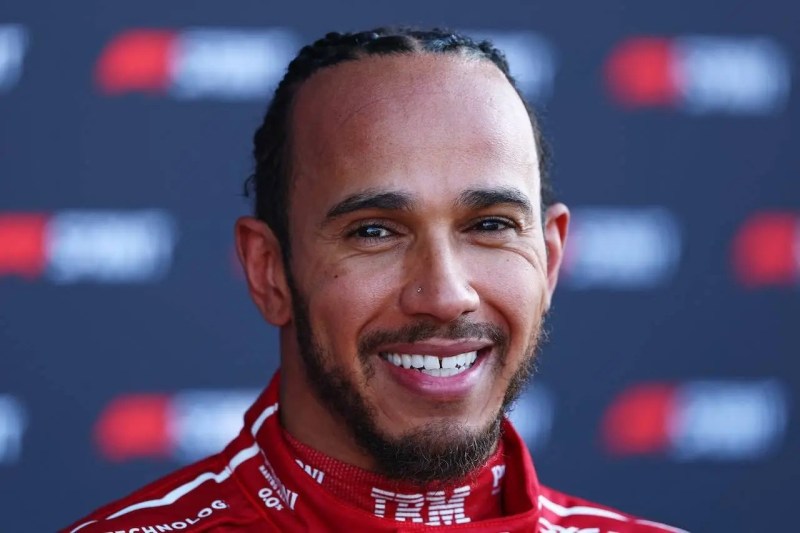
Lewis Hamilton’s name is synonymous with speed, precision, and relentless ambition. The seven-time Formula 1 World Champion didn’t just dominate a sport; he redefined it, challenging conventions while pushing the boundaries of performance, innovation, and social change. When fans ask, "Who is Lewis Hamilton?" the answer extends far beyond his record-breaking stats—it’s about a man who transformed Formula 1 into a global spectacle, a voice for equality, and a benchmark for excellence.
His journey began in a modest London neighborhood, where a young Hamilton, armed with raw talent and an unshakable work ethic, navigated a path littered with skepticism. The son of a black father and a white mother, he faced early doubts about his ability to compete in a sport dominated by white drivers. Yet, by the age of 22, he had secured his first World Championship, proving that determination could outpace prejudice. Today, as the most successful British driver in F1 history, Hamilton’s legacy isn’t just measured in titles or lap times—it’s measured in the lives he’s inspired.
Beyond the track, Hamilton’s influence is undeniable. He’s a cultural ambassador, a sustainability advocate, and a vocal activist for racial justice, using his platform to demand systemic change. When Mercedes announced his retirement from F1 in 2024, it wasn’t just the end of an era for racing—it marked the close of a chapter where sport, activism, and innovation collided. To understand who is Lewis Hamilton is to grasp the intersection of athletic genius, unyielding resilience, and a commitment to leaving the world better than he found it.

The Complete Overview of Who Is Lewis Hamilton
Lewis Hamilton’s story is one of defiance against odds, a narrative that begins in the working-class streets of Stevenage, Hertfordshire, where he was born on January 7, 1985. Raised by his mother, Linda, and stepfather, Anthony Hamilton, the young Lewis showed an early affinity for cars, inspired by his father’s passion for motorsport. By age 10, he was karting, and by 15, he had caught the attention of McLaren, becoming the youngest driver in the British Formula Renault Championship. His meteoric rise was punctuated by a controversial move to McLaren’s junior team, where he faced criticism for being "too black" to succeed in F1—a sentiment that would later fuel his activism.
Hamilton’s breakthrough came in 2007, when he joined McLaren as a teammate to Fernando Alonso. That season, he secured his first World Championship, becoming the fifth British driver to win the title and the youngest at the time. His rivalry with Alonso and later with Sebastian Vettel and Nico Rosberg cemented his status as a titan of the sport. But it was with Mercedes, starting in 2013, that Hamilton achieved unprecedented dominance. The German manufacturer’s hybrid-era dominance, combined with his own evolution as a driver, led to an astonishing six consecutive titles from 2014 to 2020—equaling Michael Schumacher’s record. His 2020 triumph in Turkey, despite a controversial restart, was a masterclass in resilience, proving that even in defeat, he could rise again.
Historical Background and Evolution
The question "Who is Lewis Hamilton?" cannot be answered without examining the sport he revolutionized. Formula 1 in the 2010s was a battleground of technological innovation, and Hamilton was at its forefront. His partnership with Mercedes engineer Andy Cowell and the development of the Mercedes-AMG Petronas F1 W06 Hybrid—nicknamed the "Silver Arrow"—marked a turning point. The car’s aerodynamic efficiency and hybrid power unit gave Hamilton a two-year advantage, during which he won 38 of 41 races. This era wasn’t just about speed; it was about redefining what a Formula 1 car could achieve, with Hamilton as the pilot of choice.
Yet Hamilton’s impact transcends his on-track achievements. He was a catalyst for change in a sport long criticized for its lack of diversity. In 2020, he launched his own charity, The Hamilton Commission, to address racial inequality in the UK, while also pushing F1 to adopt more inclusive practices. His activism extended to sustainability, with Mercedes’ shift to 100% sustainable fuel in 2026—a direct result of his advocacy. Hamilton’s evolution from a prodigy to a global icon reflects a broader shift in motorsport: from a male-dominated, insular world to one where equality and innovation are non-negotiable.
Core Mechanisms: How It Works
Hamilton’s success is often attributed to his "perfect" driving style—a blend of aggression, precision, and adaptability. Unlike his predecessor Schumacher, who relied on raw power and physicality, Hamilton mastered the art of efficiency. His ability to extract every ounce of performance from a car, whether in qualifying or race conditions, set him apart. For example, his 2019 season was defined by qualifying dominance, where he secured 12 pole positions—each one a testament to his understanding of tire management, aerodynamic flow, and race strategy.
Behind the wheel, Hamilton’s mechanics are a study in consistency. His qualifying laps often follow a ritual: a conservative first lap to gauge tire wear, followed by a progressive push to the limit. His racecraft is equally methodical—managing fuel loads, tire degradation, and pit-stop windows with surgical precision. But what truly separates him is his psychological edge. In high-pressure moments, such as the 2020 Turkish Grand Prix, where he lost the lead to Max Verstappen, Hamilton’s ability to regroup and capitalize on mistakes made him a master of the mental game. His rivalry with Verstappen in the 2021 season further highlighted his adaptability, as he adjusted to a new car and teammate dynamic while still challenging for the title.
Key Benefits and Crucial Impact
The legacy of who is Lewis Hamilton is measured in more than just championships. His career has elevated Formula 1’s global appeal, turning it into a mainstream spectacle with a younger, more diverse fanbase. His social media presence—particularly his candid, often emotional posts—has humanized the sport, making it relatable to millions who previously saw it as distant or elitist. Additionally, his advocacy for sustainability has forced the industry to confront its environmental footprint, with F1’s commitment to net-zero carbon emissions by 2030 a direct result of his influence.
Economically, Hamilton’s impact is staggering. His sponsorship deals, including partnerships with Monster Energy and Tommy Hilfiger, have redefined athlete-brand collaborations in motorsport. His 2020 deal with Mercedes reportedly made him the highest-paid F1 driver in history, underscoring his marketability. Off-track, his The Hamilton Commission report in 2021 exposed systemic racial disparities in the UK, leading to policy changes and corporate accountability. These efforts cement his role not just as a driver, but as a change agent.
"Racing is life. But life isn’t just racing. It’s about the people around you, the impact you have, and the legacy you leave." —Lewis Hamilton, 2023
Major Advantages
- Unmatched Consistency: Hamilton’s ability to deliver results across different cars and eras—from McLaren’s V8 engines to Mercedes’ hybrids—proves his adaptability. His 103 race wins (as of 2024) are a record, showcasing his longevity and skill.
- Technological Pioneer: His collaboration with Mercedes led to groundbreaking innovations, including the W06 Hybrid’s front-wing design and the W11’s "zero-pod" concept, which influenced F1’s aerodynamic regulations.
- Global Ambassador for F1: Through his social media and public appearances, Hamilton has grown F1’s audience by 40% since 2010, making it a billion-dollar industry with a younger demographic.
- Activism and Advocacy: His campaigns for racial equality and sustainability have forced F1 to adopt inclusive policies, including the Drive to Zero initiative and increased diversity in team workforces.
- Mental Resilience: From overcoming early skepticism to bouncing back from crashes and controversies, Hamilton’s ability to thrive under pressure is unparalleled in modern motorsport.
Comparative Analysis
| Aspect | Lewis Hamilton | Michael Schumacher |
|---|---|---|
| Championships | 7 (2008, 2014–2015, 2017–2020) | 7 (1994–1995, 2000–2004) |
| Winning Seasons | 8 (including 6 consecutive) | 5 consecutive (2000–2004) |
| Innovation Impact | Hybrid era dominance; sustainability advocacy | Brought Ferrari to modern success; aerodynamic revolution |
| Cultural Influence | Global icon; racial equality advocate | Sport’s "Professor"; tactical genius |
Future Trends and Innovations
The question "Who is Lewis Hamilton?" will continue to evolve as he transitions from racing to other ventures. Post-F1, he has expressed interest in motorsport management, potentially leading a team or investing in junior drivers—mirroring his mentor, Ron Dennis. His focus on sustainability suggests he’ll remain a key figure in shaping F1’s future, particularly with the shift to 100% sustainable fuel. Additionally, his The Hamilton Commission work may expand into global policy advocacy, leveraging his platform to address systemic inequalities.
Technologically, Hamilton’s influence will likely extend to electric mobility. His partnership with Mercedes-Benz in road cars and his advocacy for green energy position him as a thought leader in the transition from fossil fuels to electric vehicles. As F1 embraces hybrid and eventually fully electric power units, Hamilton’s early advocacy could set the standard for how motorsport balances speed with sustainability—a legacy that will define the next decade of racing.

Conclusion
Lewis Hamilton’s career is a masterclass in how to dominate a sport while simultaneously reshaping its values. Who is Lewis Hamilton? is a question with layers: he is the most successful British F1 driver, a seven-time world champion, and a record-breaker. But he is also a cultural disruptor, an activist, and a symbol of what’s possible when talent meets unyielding determination. His journey from a young kart racer in Stevenage to a global icon reflects the power of perseverance in the face of adversity.
As he steps away from the cockpit, Hamilton’s influence will persist in the drivers he inspires, the policies he champions, and the legacy he leaves behind. Whether through future business ventures, advocacy, or mentorship, his impact on motorsport—and society—will be felt for generations. For now, the answer to "who is Lewis Hamilton?" remains simple: he is the driver who didn’t just win races, but changed the world.
Comprehensive FAQs
Q: How many World Championships has Lewis Hamilton won?
A: Lewis Hamilton has won seven Formula 1 World Championships (2008, 2014, 2015, 2017, 2018, 2019, and 2020), tying him with Michael Schumacher for the most titles in history.
Q: What teams has Lewis Hamilton raced for?
A: Hamilton began his F1 career with McLaren (2007–2012), then joined Mercedes (2013–2020). He announced his retirement from F1 in 2024.
Q: What is Lewis Hamilton’s net worth?
A: As of 2024, Lewis Hamilton’s net worth is estimated at over $400 million, primarily from racing, sponsorships, and business ventures.
Q: Has Lewis Hamilton ever won a race with a different team?
A: No. Hamilton’s 103 wins all came with McLaren and Mercedes. However, he did win championships with both teams.
Q: What is Lewis Hamilton’s role in sustainability?
A: Hamilton has been a vocal advocate for sustainability in F1, pushing for the sport to adopt 100% sustainable fuel by 2026. He also supports renewable energy and has invested in eco-friendly initiatives.
Q: Did Lewis Hamilton face racism early in his career?
A: Yes. Hamilton has spoken openly about experiencing racial prejudice in motorsport, including being told he was "too black" to succeed in F1. His activism later addressed these issues.
Q: What is Lewis Hamilton’s next project after F1?
A: While details are still emerging, Hamilton has expressed interest in motorsport leadership, potential team ownership, and expanding his sustainability advocacy.
Q: How did Lewis Hamilton break Michael Schumacher’s record?
A: Hamilton equaled Schumacher’s seven titles in 2020 but did not surpass him. However, his six consecutive championships (2014–2020) matched Schumacher’s five (2000–2004).
Q: What is The Hamilton Commission?
A: Launched in 2020, The Hamilton Commission is an initiative to address racial inequality in the UK, inspired by Hamilton’s own experiences. Its reports have influenced policy and corporate accountability.
Q: Is Lewis Hamilton involved in road racing?
A: Yes. Hamilton has participated in events like the Goodwood Festival of Speed and has expressed interest in future road racing or endurance ventures.
Leave a Comment
Comments are moderated before appearing. The data you submit is processed according to the Privacy Policy of Vetlife Archive.