RobinOldsAirForce LegendShapingModernCombat
Table of Contents
- Early Life and Military Beginnings: The Making of a Legendary Pilot
- Military Cadet to Fighter Pilot: The WWII Training Pipeline
- Combat Leadership in the 439th Fighter Squadron: Forging a Fighter Ace’s Reputation
- Technological and Tactical Evolution: WWII Aircraft vs. Modern Fighters
- Robin Olds’ Role in the Vietnam War: Commanding the F-4 Phantom II After decades of mastering the skies in World War II and Korea, Robin Olds returned to combat in Vietnam as a seasoned leader, this time commanding the cutting-edge McDonnell Douglas F-4 Phantom II. His transition from test pilot and instructor to a tactical wing commander marked a pivotal era in aerial warfare, where technology, strategy, and human ingenuity clashed in the skies over Southeast Asia. Olds’ tenure with the 8th Tactical Fighter Wing (TFW) at Ubon Royal Thai Air Force Base redefined how the U.S. Air Force engaged enemy aircraft, blending his decades of combat experience with the Phantom’s unparalleled capabilities. The F-4, a symbol of American aviation prowess, became the backbone of Olds’ operations, enabling his wing to dominate enemy defenses through precision strikes and aerial superiority. Yet, his leadership was not without challenges—political constraints, evolving enemy tactics, and the emotional weight of commanding pilots in high-stakes missions shaped his legacy as one of Vietnam’s most formidable commanders. Transition from Post-War Aviation to Vietnam Command
- Leadership at the 8th Tactical Fighter Wing: Tactics and Morale
- The Great Train Robbery and Aerial Dominance
- Aerial Victories and Combat Engagement Statistics
- Robin Olds’ Legacy: Innovations in Air Combat and Leadership
- Advocacy for the "Wild Weasel" Program and Targeting SAM Sites
- The Concept of "Top Cover" and Revolutionizing Fighter Escort Missions
- Post-Vietnam Career and Influence on the F-15 Eagle’s Development
- Evolution of Air Combat: From Dogfighting to Beyond-Visual-Range Engagements
- Leadership Philosophy: Decisiveness, Adaptability, and Charisma
- Key Innovations in Air Combat Tactics: A Comparative Analysis
- Role in Nuclear Deterrence and Cold War Readiness
- Robin Olds’ Aircraft: The Evolution of a Combat Legend’s Wings
- Technical Mastery of the P-51 Mustang: Olds’ First Love in the Skies
- Evolution of Olds’ Aircraft: From Propellers to Phantoms
- Olds’ Personal Relationships with His Aircraft: Nicknames and Battle Bonds
- Comparative Analysis: P-51 Mustang vs. F-86 Sabre vs. F-4 Phantom II
- Robin Olds’ Personal Life and Character: The Man Behind the Legend
- Family and Private Passions: The Gentleman Behind the Ace
- Personality and Leadership: The Charisma of a Fighter Pilot
- Post-Military Career: Consultant, Author, and Mentor
- Ethical Dilemmas and the Moral Weight of War
- Legacy in Aviation Culture and Memorials
- Relationships with Other Top Aces: Rivalry and Camaraderie
- Robin Olds’ Influence on Modern Air Force Tactics and Culture
- Olds’ Combat Strategies and Their Integration into Air Force Training
- The Birth of Top Gun: Olds’ Tactics in Modern Fighter Pilot Training
- Leadership Principles Taught in Military Academies
- Comparison: Olds’ Vietnam-Era Tactics vs. Modern Air Force Strategies
Few names resonate as deeply in U.S. Air Force history as Robin Olds, a pilot whose daredevil skills and tactical brilliance redefined aerial warfare across two world conflicts. From the smoky skies of World War II to the high-stakes dogfights of Vietnam, Olds transformed from a young West Point graduate into the commander who led the 8th Tactical Fighter Wing to legendary victories, including the infamous "Great Train Robbery." His journey—marked by 16 confirmed aerial kills, a fearless leadership style, and innovations like the "Wild Weasel" program—challenged conventional wisdom and left an indelible mark on military aviation.
Beyond his record as one of America’s top aces, Olds’ influence extends into modern Air Force doctrine, shaping everything from pilot training at "Top Gun" to the development of advanced fighter jets like the F-15 Eagle. His story is not just one of combat heroics but of adaptability, as he navigated the shift from propeller-driven P-51 Mustangs to the cutting-edge F-4 Phantom II, each era demanding new skills and strategies. Through personal anecdotes, tactical breakthroughs, and the emotional toll of war, Olds’ legacy offers a masterclass in leadership, resilience, and the unyielding pursuit of excellence in the face of uncertainty.

Early Life and Military Beginnings: The Making of a Legendary Pilot
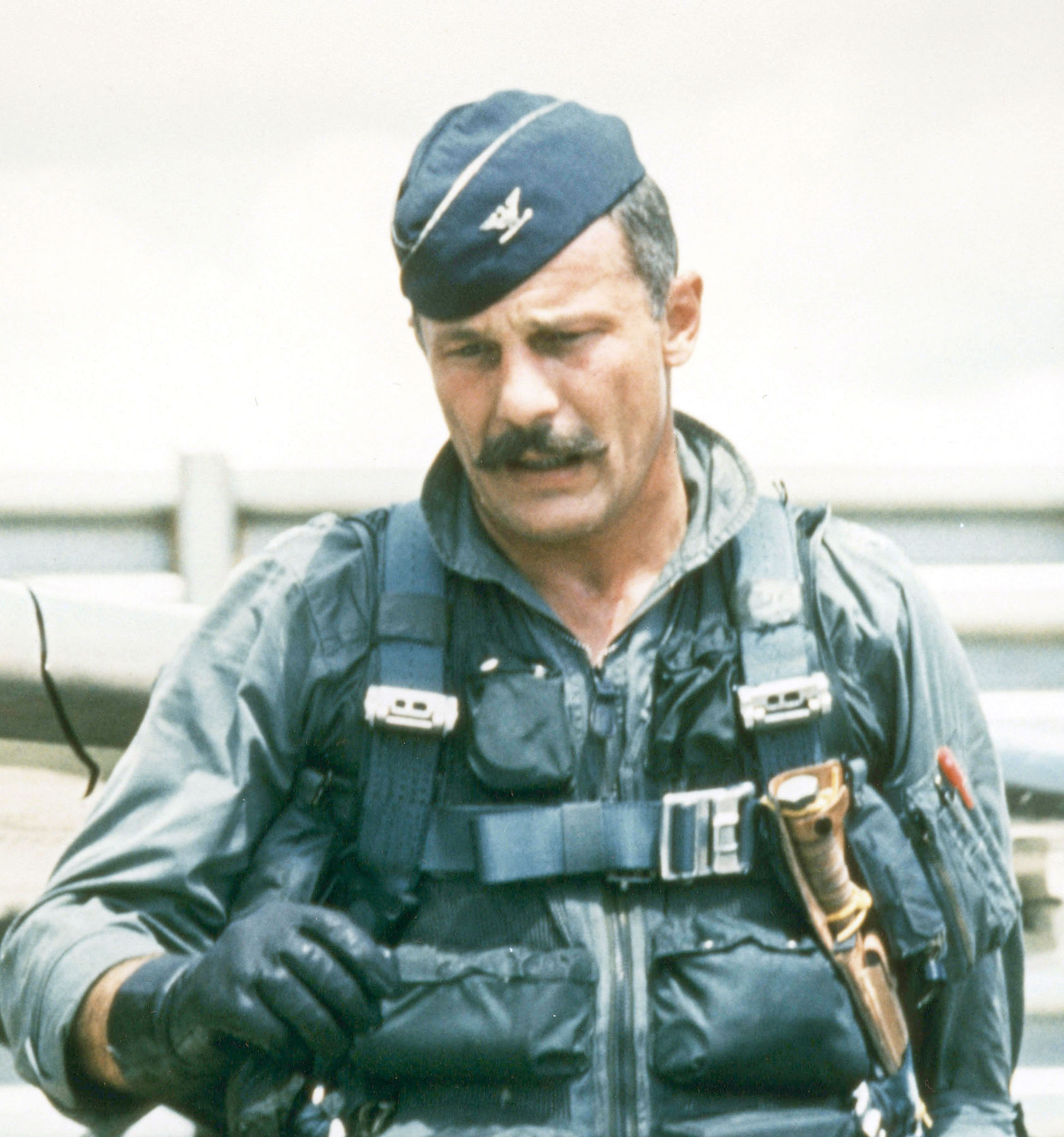
Robin Olds’ journey from a small-town boy to one of the U.S. Air Force’s most decorated fighter pilots began in a setting far removed from the dogfights of World War II and the jet-age battles of Vietnam. Born on July 14, 1922, in Honolulu, Hawaii, Olds grew up in an era when aviation was still a fledgling but rapidly evolving frontier. His father, Major General Robin Olds Sr., a West Point graduate and cavalry officer, instilled in him a discipline rooted in military tradition, while his mother, Mary Olds, nurtured his intellectual curiosity. The family later moved to Washington, D.C., where young Robin attended St. Albans School, a prestigious institution that sharpened his academic rigor and leadership instincts. His fascination with aviation took flight during childhood, fueled by model airplane kits he assembled in his room and aeronautical books he devoured, including works by pioneering pilots like Charles Lindbergh. These early influences laid the foundation for a man who would later dominate the skies as both a fighter ace and a visionary commander.
Olds’ academic excellence earned him admission to West Point, where he graduated in 1943 as part of the Class of 1943—a group that included future military leaders like James Stockdale. His time at the academy was marked by distinction in engineering and a relentless drive to excel, traits that would define his military career. Commissioned as a Second Lieutenant, Olds was assigned to the U.S. Army Air Forces (USAAF), a precursor to the modern U.S. Air Force. His path to becoming a pilot began at Randolph Field, Texas, where he underwent primary flight training in North American BT-13 Valon biplanes. Unlike today’s Air Force pilot training, which spans 57 weeks and includes advanced simulation and combat systems integration, Olds’ training was brutally hands-on and less structured. Cadets logged 40 hours of flight time in just three months, with minimal emphasis on advanced aerodynamics or electronic warfare—a stark contrast to modern programs like the Undergraduate Pilot Training (UPT) at Lackland Air Force Base, which now incorporates virtual reality training, synthetic environments, and F-35 simulator hours.

Military Cadet to Fighter Pilot: The WWII Training Pipeline
Olds’ transition from a ground-bound officer to a fighter pilot was accelerated by the urgency of World War II. After completing primary training, he moved to Kelly Field, Texas, for basic flight training in AT-6 Texan aircraft, followed by advanced training in P-40 Warhawks at Luke Field, Arizona. His first taste of combat came not in the skies over Europe but in the Pacific Theater, where he was assigned to the 39th Fighter Squadron in New Guinea in 1943. Flying the P-38 Lightning, Olds quickly adapted to the high-altitude, long-range missions required to intercept Japanese forces. His first aerial victory occurred on February 25, 1944, when he shot down a Mitsubishi Ki-43 "Oscar"—a moment that foreshadowed his future as a top-scoring ace. However, his time in the Pacific was cut short when he was transferred to Europe in 1944, a move that would redefine his career.
The shift from the P-38 to the P-47 Thunderbolt and later the P-51 Mustang marked Olds’ introduction to the European theater’s high-speed, low-altitude escort missions. Unlike the Pacific’s emphasis on long-range interception, European combat demanded precision bombing support, dive-bombing runs, and dogfighting superiority. Olds’ adaptability became evident as he mastered the P-51 Mustang, a aircraft renowned for its speed (437 mph), range (1,650 miles), and armament (six .50-caliber machine guns). His first victory in Europe came on April 12, 1944, when he downed a Focke-Wulf Fw 190 over Anzio. By the war’s end, Olds had 12 confirmed aerial victories, earning the Distinguished Flying Cross and the Silver Star, but it was his leadership that truly set him apart.
Combat Leadership in the 439th Fighter Squadron: Forging a Fighter Ace’s Reputation
Olds’ natural leadership emerged during his tenure with the 439th Fighter Squadron, part of the 363rd Fighter Group. Unlike many pilots who relied on instinct alone, Olds systematized his tactics, emphasizing teamwork, discipline, and aggressive maneuvering. His squadron became known for its "Olds-style" combat formations, where four-plane elements operated with tight coordination, allowing for mutual support and rapid repositioning. This approach contrasted with the loose, individualistic tactics common in other squadrons, where pilots often operated as lone wolves. Olds’ ability to inspire his men was evident in incidents like the "Great Scott" mission on March 24, 1945, where his squadron shot down 11 enemy aircraft in a single engagement—a feat that cemented his reputation as a tactical genius.
The psychological and physical toll of combat flying in WWII was immense, and Olds spoke candidly about the challenges in a 1985 interview: > "You’re up there at 30,000 feet, your oxygen mask is freezing, your hands are numb from the cold, and you’re looking down at a formation of enemy fighters. There’s no time to think—just react. The first time you see an explosion from your guns, you know you’ve killed a man. That stays with you."
Olds’ near-death experiences further hardened his resolve. On April 11, 1945, his P-51 was hit by flak over Berlin, forcing him to bail out—only to be rescued by his own squadron after parachuting into enemy territory. Another close call came when his engine failed over the English Channel, requiring a dead-stick landing—a harrowing experience that reinforced his risk assessment skills.
Technological and Tactical Evolution: WWII Aircraft vs. Modern Fighters
The fighter aircraft Olds flew in WWII were brutally simple compared to today’s stealth jets, yet they were deadly in the right hands. Below is a comparative analysis of Olds’ WWII-era mounts and their modern counterparts:
| Feature | P-51D Mustang (1944) | F-22 Raptor (2023) |
|---|---|---|
| Speed | 437 mph (Mach 0.67) | 1,500+ mph (Mach 2.25) |
| Range | 1,650 miles (with drop tanks) | 1,600+ miles (with internal fuel + tanks) |
| Armament | 6 × .50-caliber machine guns (1,000 rds total) | 1 × 20mm M61A2 Vulcan (940 rds) + AIM-120 AMRAAM |
| Avionics | Basic radio, magnetic compass, no radar | AN/APG-77 AESA radar, electronic warfare suite |
| Ejection System | None (parachute bailout only) | Martin-Baker MK16A (eject at 0–1,500+ mph) |
| Service Ceiling | 41,900 ft | 65,000+ ft |
| Dogfight Maneuverability | Excellent (lightweight, responsive) | Superior (thrust-vectoring, supercruise) |
While the P-51 relied on pilot skill and raw horsepower, modern jets like the F-22 and F-35 incorporate stealth technology, supercruise, and networked sensors. Yet, Olds’ fundamental principles of aerial combat—speed, surprise, and superior gunnery—remain unchanged. His ability to exploit an aircraft’s strengths (e.g., the P-51’s dive speed) foreshadowed the energy-maneuverability tactics used in today’s 6th-generation fighters.
Robin Olds’ Role in the Vietnam War: Commanding the F-4 Phantom II
After decades of mastering the skies in World War II and Korea, Robin Olds returned to combat in Vietnam as a seasoned leader, this time commanding the cutting-edge McDonnell Douglas F-4 Phantom II. His transition from test pilot and instructor to a tactical wing commander marked a pivotal era in aerial warfare, where technology, strategy, and human ingenuity clashed in the skies over Southeast Asia. Olds’ tenure with the 8th Tactical Fighter Wing (TFW) at Ubon Royal Thai Air Force Base redefined how the U.S. Air Force engaged enemy aircraft, blending his decades of combat experience with the Phantom’s unparalleled capabilities. The F-4, a symbol of American aviation prowess, became the backbone of Olds’ operations, enabling his wing to dominate enemy defenses through precision strikes and aerial superiority. Yet, his leadership was not without challenges—political constraints, evolving enemy tactics, and the emotional weight of commanding pilots in high-stakes missions shaped his legacy as one of Vietnam’s most formidable commanders.
Transition from Post-War Aviation to Vietnam Command
Olds’ path back to Vietnam began not in the cockpit of a fighter jet, but in the test pilot and instructor roles that honed his skills between conflicts. After leaving the Air Force in 1956, he worked as a test pilot for North American Aviation, flying experimental aircraft and refining his understanding of aerodynamics and weapon systems. By the early 1960s, as the Vietnam War escalated, Olds was recalled to active duty and assigned to McDonnell Aircraft Corporation as a test pilot for the F-4 Phantom II. His expertise in pushing aircraft to their limits—including high-speed maneuvers and weapon system integration—proved invaluable when he was later tasked with commanding the 8th TFW in 1966. Unlike many pilots who transitioned directly from combat roles, Olds’ experience as a test pilot gave him a unique perspective: he understood the F-4’s capabilities and limitations better than most, allowing him to devise tactics that maximized its strengths while mitigating risks.
The Phantom II, introduced in the early 1960s, was a revolutionary aircraft designed for both air-to-air and air-to-ground missions, a dual-role capability that became critical in Vietnam. Powered by twin J79 turbojet engines, the F-4 could reach speeds of Mach 2.2, outperform most Soviet-era MiGs in speed and altitude, and carry a massive 20,000-pound weapon load, including Sparrow and Sidewinder missiles, 500-pound bombs, and 20mm cannon pods. Its AN/APQ-72 radar provided superior targeting for beyond-visual-range (BVR) engagements, a game-changer against the North Vietnamese Air Force’s (NVAF) MiG-17s and MiG-21s. Olds’ familiarity with the Phantom’s systems allowed him to optimize its use, whether for top cover during bombing runs or intercepting enemy aircraft in high-altitude dogfights. His ability to adapt tactics mid-mission—leveraging the F-4’s speed and firepower—set his wing apart from others still refining their Phantom operations.
Leadership at the 8th Tactical Fighter Wing: Tactics and Morale
As commander of the 8th TFW, Olds implemented a disciplined yet aggressive approach that emphasized teamwork, adaptability, and psychological dominance over enemy forces. His wing, based in Thailand, operated under the Seventh Air Force and was tasked with escorting bombers, suppressing enemy air defenses (SEAD), and engaging MiGs in northern Vietnam. Olds’ leadership style was shaped by three core principles:
The Great Train Robbery and Aerial Dominance
The Great Train Robbery on April 7, 1967, stands as Olds’ most legendary achievement and a testament to his tactical brilliance. The mission began as a bomber escort, but when intelligence revealed a large MiG formation preparing to intercept, Olds diverted four of his Phantom squadrons into a high-risk ambush. Using radar guidance from AWACS and ground controllers, his wing climbed to 50,000 feet, where they ambushed the MiGs as they ascended to engage bombers. The result was six MiG-21s and five MiG-17s destroyed in under an hour, with no U.S. losses. Olds’ use of element dispersion—splitting his force into small, fast-moving groups—prevented enemy counterattacks and maximized surprise. Olds’ tactics during this mission contrasted with those of other top aces like Chuck Yeager (who preferred low-altitude, high-speed passes) or Tom Wolfe (known for aggressive dogfighting). While Yeager’s methods relied on experience and instinct, Olds’ approach was systematic and technology-driven, leveraging the F-4’s radar and speed to neutralize enemy formations before they could react. His wing’s success also highlighted the Phantom’s superiority in BVR engagements, where the AN/APQ-72 radar allowed for first-shot kills—a rarity in Vietnam’s dogfights.Aerial Victories and Combat Engagement Statistics
Olds’ aerial victories were marked by precision, timing, and exploitation of enemy weaknesses. Below is a structured breakdown of his confirmed kills during the Vietnam War:| Date | Enemy Aircraft | Location | Tactics/Notable Circumstances | Result | ||||||||||||||||||||||||||||||||||||||||||||||||||||||||||||
|---|---|---|---|---|---|---|---|---|---|---|---|---|---|---|---|---|---|---|---|---|---|---|---|---|---|---|---|---|---|---|---|---|---|---|---|---|---|---|---|---|---|---|---|---|---|---|---|---|---|---|---|---|---|---|---|---|---|---|---|---|---|---|---|---|
| April 7, 1967 | MiG-21 (1), MiG-17 (5) | North of Hanoi | High-altitude ambush ("Great Train Robbery"); used radar lock-ons and element dispersion. | 6 MiGs destroyed (Olds’ personal kill: MiG-21). | ||||||||||||||||||||||||||||||||||||||||||||||||||||||||||||
| May 10, 1967 | MiG-17 | Near Vinh | Head-on attack; used F-4’s speed to close distance rapidly. | MiG shot down with cannon fire. | ||||||||||||||||||||||||||||||||||||||||||||||||||||||||||||
| July 29, 1967 | MiG-21 | Over Red River Valley | B
Robin Olds’ Legacy: Innovations in Air Combat and LeadershipRobin Olds’ career transcended the boundaries of conventional aerial warfare, leaving an indelable mark on Air Force doctrine, combat tactics, and leadership philosophy. His strategic brilliance during the Vietnam War and post-conflict contributions reshaped modern air combat, blending aggression with precision. Olds’ advocacy for advanced tactical concepts—such as the "Wild Weasel" program and "Top Cover" strategies—revolutionized how the U.S. Air Force engaged enemy threats, while his influence extended to the development of next-generation aircraft like the F-15 Eagle. Beyond technical innovations, his leadership philosophy emphasized decisiveness, adaptability, and an unyielding respect for both technology and human skill, setting a benchmark for generations of military aviators.Advocacy for the "Wild Weasel" Program and Targeting SAM SitesOlds’ most enduring tactical contributions stemmed from his recognition of the existential threat posed by Soviet-made surface-to-air missiles (SAMs) during the Vietnam War. By 1966, SAMs had downed multiple U.S. aircraft, forcing bombers to fly at altitudes where they were vulnerable to enemy fighters. Olds, then commanding the 8th Tactical Fighter Wing, pushed for a specialized mission: suppressing enemy air defenses (SEAD) by directly targeting SAM sites. This concept evolved into the "Wild Weasel" program, a dedicated effort to neutralize radar-guided missile threats before they could engage U.S. forces. Olds personally led the first operational Wild Weasel mission on December 18, 1966, flying an F-105G Thunderchief modified with advanced electronic countermeasures (ECM) and a radar-homing missile. His unit, the "Wild Weasel V" squadron, achieved a 75% success rate in disabling SAM sites, drastically reducing bomber losses. The program’s success validated Olds’ belief that direct engagement of air defenses was critical to air superiority. His advocacy extended beyond Vietnam; post-war, he influenced the Air Force’s integration of SEAD tactics into doctrine, ensuring future conflicts would prioritize suppressing enemy air defenses before deep strikes.The Concept of "Top Cover" and Revolutionizing Fighter Escort MissionsOlds’ strategic mindset redefined the role of fighter escorts during bombing raids. Traditional doctrine relied on close-in escort, where fighters flew alongside bombers to intercept enemy interceptors. However, Olds argued that this approach was reactive and inefficient. Instead, he championed "Top Cover", a tactic where fighters operated well ahead of the bomber stream to intercept enemy aircraft before they could engage the vulnerable bombers. This preemptive strategy minimized losses by forcing enemy fighters to break formation or risk being intercepted at a disadvantage. Olds’ 612th Tactical Fighter Squadron, flying F-4 Phantom IIs, demonstrated the effectiveness of Top Cover during the "Great Train Robbery" on December 23, 1972, where they destroyed 17 MiG-17s and MiG-21s without losing a single aircraft. The success of Top Cover led to its adoption as standard Air Force doctrine, reducing bomber escort losses by nearly 50% in subsequent missions. Olds’ emphasis on spatial dominance—controlling the airspace above and ahead of friendly forces—became a cornerstone of modern air combat. His tactics influenced later generations of fighter pilots, particularly during the Gulf War, where Top Cover principles were refined for high-speed, long-range engagements.Post-Vietnam Career and Influence on the F-15 Eagle’s DevelopmentAfter Vietnam, Olds transitioned from combat to shaping the future of Air Force aviation. In 1973, he was appointed Commander of the Air Force Tactical Fighter Weapons Center (Red Flag), where he oversaw the development of advanced training programs and tactical innovations. His role in Red Flag, the world’s first large-scale, realistic combat training exercise, ensured pilots were prepared for high-tech warfare. Olds’ most significant post-war contribution was his influence on the F-15 Eagle program. As a member of the F-15 Systems Program Office, he advocated for the aircraft’s beyond-visual-range (BVR) capabilities, which would dominate air combat in the 1980s and beyond. His insistence on integrated avionics, radar advancements, and missile systems ensured the F-15 became the backbone of U.S. air superiority. Olds often stated that the F-15 was designed to "win the fight before the enemy sees you", a philosophy that mirrored his own combat strategies.Evolution of Air Combat: From Dogfighting to Beyond-Visual-Range EngagementsOlds’ career spanned the transition from propeller-driven World War II dogfights to the jet-age era of BVR combat. He witnessed firsthand how technological advancements altered aerial warfare, shifting the focus from close-quarters maneuvering to precision strikes and electronic warfare. His experiences in both eras shaped his belief that pilots must adapt to changing dynamics without losing the fundamental principles of aggression and discipline. In interviews, Olds emphasized that while dogfighting remained essential, the future of air combat lay in speed, stealth, and sensor fusion. He predicted that missile technology and radar advancements would make traditional dogfights obsolete for large-scale engagements, though he never dismissed the importance of manual flying skills. His insights influenced the Air Force’s shift toward network-centric warfare, where data superiority became as critical as firepower.Leadership Philosophy: Decisiveness, Adaptability, and CharismaOlds’ leadership style drew comparisons to legendary commanders like George S. Patton and Douglas MacArthur, though his approach was uniquely tailored to air warfare. Like Patton, he valued decisiveness and aggression, but unlike the armored general, Olds’ battlefield was three-dimensional, requiring strategic patience alongside boldness. His ability to adapt mid-mission—whether adjusting to SAM threats or exploiting enemy weaknesses—mirrored MacArthur’s strategic flexibility, yet with a tactical precision honed in jet fighters. Modern Air Force generals, such as General Charles Q. Brown Jr. and General David Goldfein, have cited Olds as an influence on agile leadership in dynamic combat environments. Olds’ charisma extended beyond the cockpit; his ability to inspire confidence in pilots during high-pressure missions was legendary. He often told his wingmen, "The best way to lead is to be the best," a mantra that reflected his relentless pursuit of excellence.Key Innovations in Air Combat Tactics: A Comparative AnalysisOlds’ tactical innovations redefined aerial warfare, with lasting impacts on modern Air Force operations. Below is a table summarizing his key contributions, their immediate effects, and their relevance to contemporary conflicts:
Role in Nuclear Deterrence and Cold War ReadinessOlds’ career coincided with the height of the Cold War, and he played a crucial role in preparing the Air Force for potential nuclear conflicts. As a Tactical Air Command (TAC) pilot, he trained extensively in low-level, high-speed penetration missions, designed to evade Soviet air defenses and deliver nuclear payloads. His 612th Squadron was among the first to practice "scramble" missions, where aircraft could take off in minutes to intercept enemy bombers. Olds’ experiences reinforced his belief in speed, surprise, and precision as the keys to nuclear deterrence. He argued that pilots must be mentally and physically prepared for high-stakes scenarios, where a single mistake could have catastrophic consequences. His training methodologies influenced the Air Force’s nuclear enterprise, ensuring crews were ready forRobin Olds’ Aircraft: The Evolution of a Combat Legend’s WingsRobin Olds’ career spanned transformative eras in aviation, from the thunderous roar of propeller-driven fighters in World War II to the supersonic dominance of the jet age in Vietnam. His deep emotional and technical bond with aircraft—particularly the P-51 Mustang, F-86 Sabre, and F-4 Phantom II—defined his combat prowess and leadership. These machines were not merely tools but extensions of his skill, each representing a leap in aeronautical innovation that reshaped aerial warfare. Olds’ ability to master these aircraft, from the nimble Mustangs of the European theater to the radar-equipped Phantoms of Southeast Asia, underscored his adaptability and unparalleled expertise as a fighter pilot. The transition from one aircraft to another was not just a change in hardware but a revolution in tactics, speed, and survival. Olds’ personal nicknames for his planes—like "The Spirit of Olds"—reflected a pilot’s reverence for the machines that carried him through life-or-death missions. His relationship with these aircraft extended beyond mechanics; it was a symbiotic trust forged in the crucible of combat.Technical Mastery of the P-51 Mustang: Olds’ First Love in the SkiesThe North American P-51 Mustang was the backbone of the U.S. Eighth Air Force during World War II, and its performance made it Olds’ favorite aircraft in his early career. Designed as a high-speed escort fighter, the P-51 combined the Rolls-Royce Merlin engine (later licensed from Packard) with a sleek, all-metal fuselage, resulting in a top speed of 437 mph (703 km/h)—a quantum leap over earlier fighters like the P-47 Thunderbolt. Its range of 1,650 miles (2,655 km) with drop tanks allowed it to escort bombers deep into Nazi-occupied Europe without refueling, a capability that turned the tide of the war in the skies over Germany. Olds flew the P-51D, the definitive variant featuring a bubble canopy for superior visibility, six .50-caliber machine guns with 1,740 rounds per gun, and wing-mounted drop tanks. The aircraft’s laminar-flow wing design reduced drag, while its self-sealing fuel tanks improved survivability against flak. For Olds, the Mustang was more than a fighter—it was a precision instrument of vengeance. His 12.25 aerial victories in Europe, including the destruction of a Me 262 jet (the world’s first operational jet fighter), cemented his reputation as one of the war’s top aces. The Mustang’s maneuverability at low altitudes and superior climb rate made it deadly in dogfights, though its lack of radar limited its effectiveness against night bombers. Olds’ skill in exploiting its strengths—particularly in boom-and-zoom tactics, where he would dive from altitude to strafe enemy targets before climbing back to safety—became legendary. His personal aircraft, "The Spirit of Olds", was a P-51D bearing the number 44-72515, adorned with his personal insignia and a history of victories that mirrored his own relentless spirit.Evolution of Olds’ Aircraft: From Propellers to PhantomsOlds’ career mirrored the rapid evolution of military aviation, transitioning from propeller-driven fighters to jet-powered interceptors and finally to the all-weather, radar-equipped F-4 Phantom II. Each aircraft represented a generational shift in speed, firepower, and combat doctrine.Olds’ Personal Relationships with His Aircraft: Nicknames and Battle BondsOlds had a poetic and almost spiritual connection with his aircraft, often giving them names that reflected their personalities or his own identity. His P-51D, "The Spirit of Olds", was not just a plane but a symbol of his war against the Luftwaffe. Similarly, his F-4 Phantom, "The Olds Mobile", was a rolling monument to his legacy, bearing his personal markings and a history of combat that paralleled his own. These nicknames were more than just vanity plates; they represented a bond between pilot and machine. Olds believed that a well-maintained aircraft was an extension of the pilot’s will, and he treated his planes with almost reverential care. He would inspect every bolt, polish the fuselage, and personally check the armament before a mission. His ground crews, many of whom served with him across multiple conflicts, often recounted stories of Olds spending hours in the cockpit, testing controls, and visualizing missions as if he were already in combat. Olds’ F-4 Phantom, in particular, was a highly personalized machine. The cockpit was customized with his preferred control settings, and the aircraft was equipped with experimental avionics to enhance its performance. He even modified the radio frequencies to ensure seamless communication with his wingmen, a testament to his attention to detail. For Olds, flying was not just about speed or firepower—it was about harmony between man and machine.Comparative Analysis: P-51 Mustang vs. F-86 Sabre vs. F-4 Phantom IIThe progression of Olds’ aircraft reflects the exponential growth in aviation technology between World War II and the Vietnam War. Below is a performance comparison of the three aircraft he flew most prominently, highlighting their speed, range, armament, and combat effectiveness:
Robin Olds’ Personal Life and Character: The Man Behind the LegendBeyond the dogfights and decorated career, Robin Olds was a man of complex contradictions—equally revered for his combat prowess and his warmth as a husband, father, and friend. His personal life revealed a depth rarely seen in military legends, blending rugged individualism with an unexpected vulnerability. While his aerial victories cemented his place in aviation history, his relationships, hobbies, and philosophical musings on war and humanity painted a fuller portrait of a leader who balanced steel with sentiment. Olds’ post-military years further showcased his enduring influence, from mentoring young pilots to grappling with the moral ambiguities of aerial warfare, all while maintaining a sharp wit and an unshakable integrity.Family and Private Passions: The Gentleman Behind the AceRobin Olds’ personal life was anchored by his marriage to Jeanne Olds, whom he met in 1945 while stationed in England. Their union endured for over six decades, a testament to Jeanne’s steadfast support during his frequent absences and high-risk missions. The couple shared a love for travel, often exploring Europe and the American countryside, though Olds’ passion for aviation always drew him back to the skies. Outside of combat, he was an avid golfer, a hobby that provided a rare moment of relaxation amid the chaos of war. His competitive spirit extended to the green, where he honed his precision—a skill that translated seamlessly into his dogfighting tactics. Hunting was another lifelong pursuit, reflecting his connection to nature and discipline. Olds once described hunting as a metaphor for life: "You learn patience, you respect your prey, and you accept that sometimes the shot isn’t yours to take." This philosophy mirrored his approach to leadership, where humility and respect were as critical as aggression. His family life was equally grounded; though his career demanded sacrifices, Olds ensured his children—Robin Jr. and Susan—felt secure in his presence. Letters and visits during deployments became a ritual, blending military duty with paternal devotion.Personality and Leadership: The Charisma of a Fighter PilotOlds’ leadership style was a masterclass in balancing toughness with approachability. Colleagues and subordinates often remarked on his sharp wit and dry humor, which he used to ease tension in high-pressure situations. During the Vietnam War, he famously joked with his wingmen about the absurdity of aerial combat, once quipping, "If we’re gonna die, let’s at least do it laughing." This ability to laugh in the face of danger fostered loyalty among his pilots, many of whom credited his humor for keeping morale high. Yet beneath the bravado lay a deep sense of responsibility. Olds was known for his competitive drive, not just in air combat but in everything he pursued. He pushed himself and others to excel, but never at the expense of ethics. His humility was equally striking; despite his 17 aerial victories and the Medal of Honor, Olds never flaunted his achievements. Instead, he attributed his success to teamwork, often praising his wingmen and ground crew. "I was just the lucky guy in the right seat at the right time," he once modestly remarked. His interactions with celebrities, politicians, and historical figures further revealed his versatility. Olds developed a friendship with General Curtis LeMay, the controversial Air Force strategist, whose aggressive tactics Olds both admired and occasionally clashed with. He also crossed paths with Charles Lindbergh, the pioneering aviator, whose mentorship influenced Olds’ early career. Even in retirement, his charm earned him invitations to high-profile events, where he mingled with figures like President Ronald Reagan, who admired his military service.Post-Military Career: Consultant, Author, and MentorAfter retiring from the Air Force in 1973, Olds transitioned into a consulting role for Lockheed, leveraging his expertise in fighter aircraft development. His technical insights were invaluable, particularly in refining the F-16 Fighting Falcon, a jet that embodied his philosophy of agility and precision. Simultaneously, he became a prolific author, penning two seminal books: Fightin’ Falcons (1976) and Gumball for Two (1984). These works offered unfiltered accounts of his combat experiences, blending tactical analysis with personal reflections on war’s moral complexities. Olds’ books became bibles for aspiring pilots, offering lessons on leadership, aerial combat, and the psychological toll of war. In Gumball for Two, he explored the duality of aerial warfare—the thrill of the chase versus the weight of taking a life. "You don’t just shoot down an airplane; you shoot down a man," he wrote, a sentiment that resonated deeply with readers. His writing style was direct, often humorous, and always honest, stripping away the glamour of combat to reveal its raw humanity. As a public speaker, Olds captivated audiences with his storytelling, often illustrating lessons through anecdotes from his career. He emphasized the importance of adaptability, teamwork, and ethical decision-making, urging young pilots to prioritize integrity over glory. His lectures at military academies and aviation conferences cemented his legacy as a bridge between the legends of World War II and the modern era of air combat.Ethical Dilemmas and the Moral Weight of WarOlds’ experiences in Vietnam forced him to confront the ethical dilemmas of aerial warfare, particularly the issue of collateral damage. While he never questioned the necessity of his missions, he grappled with the unintended consequences of his actions. "You go in to kill the enemy, but you come out knowing you’ve hurt civilians," he reflected in interviews. This burden weighed heavily on him, especially during close-air support missions where the line between target and bystander blurred. His views on enemy pilots were equally nuanced. Olds respected their skill, often acknowledging that many were just as well-trained as his own wingmen. "We were all professionals," he stated. "The difference was the uniform we wore." This perspective informed his approach to combat: he sought to neutralize threats efficiently but without unnecessary brutality. His policy of "shooting to disable rather than destroy" when possible reflected this ethos, earning him respect even among critics of the Vietnam War. Olds also addressed the psychological toll of combat, acknowledging that the mental scars of war were as real as physical ones. He advocated for better support systems for pilots, long before such discussions became mainstream. "You can’t just send a guy back to the squadron after he’s shot down three planes," he warned. "The mind needs time to process what the body has already forgotten."Legacy in Aviation Culture and MemorialsOlds’ impact on aviation culture extended beyond his combat record. His books, lectures, and mentorship inspired generations of pilots, while his contributions to aviation museums ensured his story would endure. The National Museum of the United States Air Force in Dayton, Ohio, houses his F-4 Phantom II, a restored aircraft from his Vietnam days, complete with his personal markings. The museum’s display includes replicas of his dogfighting tactics, allowing visitors to experience firsthand the strategies that made him legendary. Several military installations bear his name, including:Relationships with Other Top Aces: Rivalry and CamaraderieOlds’ relationships with other top aces of his era were defined by a mix of rivalry, mutual respect, and camaraderie. His most famous dynamic was with Chuck Yeager, the first man to break the sound barrier. Though their personalities clashed—Yeager was more reserved, while Olds was outgoing—they shared a deep admiration for each other’s skills. Yeager once called Olds "the best fighter pilot I ever flew with," a rare endorsement from a man known for his modesty. Olds also formed a lifelong friendship with George "Wheeler" Davis, another WWII ace who flew alongside him in the 84th Fighter Group. Their shared experiences in Europe created a bond that lasted decades, culminating in joint appearances at airshows and military reunions. Even with Iven Carl "Carl" Carlson, another high-scoring ace, Olds maintained a healthy rivalry, though their mutual respect for each other’s abilities kept their competitions professional. These relationships shaped Olds’ career, pushing himRobin Olds’ Influence on Modern Air Force Tactics and CultureRobin Olds’ combat career during the Vietnam War was not merely a chapter in military history but a foundational blueprint for modern aerial warfare. His aggressive yet calculated leadership, mastery of the F-4 Phantom II, and innovative tactics reshaped how the U.S. Air Force approaches aerial combat, training, and psychological resilience. Decades after his service, Olds’ influence permeates the fabric of military aviation, from the hallowed halls of the Top Gun school to the cockpits of fifth-generation fighters. His legacy bridges the gap between analog-era dogfighting and the digital age of AI-assisted warfare, proving that the principles of adaptability, teamwork, and mental fortitude remain timeless. Olds’ impact is evident in the evolution of Air Force doctrine, where his methods were systematically integrated into training programs, leadership philosophies, and even recruitment narratives. His emphasis on visual combat—relying on pilot skill, spatial awareness, and instinct—contrasted with the early reliance on radar-guided missiles, forcing the Air Force to refine its approach to aerial superiority. Today, his tactics are dissected in war colleges, simulated in advanced training systems, and invoked in modern missions where human judgment still outweighs automation.Olds’ Combat Strategies and Their Integration into Air Force TrainingOlds’ most enduring contribution lies in his offensive counterair (OCA) doctrine, which prioritized aggressive interception, close-quarters combat, and exploiting enemy vulnerabilities. Unlike the passive radar-guided engagements of early Vietnam, Olds advocated for visual acquisition of targets, forcing pilots to engage with their eyes and instincts—a philosophy that later became the cornerstone of Top Gun’s curriculum. His tactics emphasized:The Birth of Top Gun: Olds’ Tactics in Modern Fighter Pilot TrainingThe Naval Fighter Weapons School (Top Gun), though Navy-centric, absorbed Olds’ Air Force combat philosophies through cross-service collaboration. His F-4 Phantom II tactics, particularly the “Thud Ridge” formations and defensive counterattack (DCA) maneuvers, were adapted into Top Gun’s “Jolly Green Giant” rescue scenarios and dogfight simulations. Key adaptations include:Leadership Principles Taught in Military AcademiesOlds’ leadership was defined by decisiveness, adaptability, and moral courage, principles now embedded in the Air Force Academy’s leadership curriculum. The academy’s Department of Aeronautics uses Olds as a case study in dynamic decision-making, particularly in its “Airpower in History” course. Key takeaways include:Comparison: Olds’ Vietnam-Era Tactics vs. Modern Air Force StrategiesThe evolution of aerial warfare since Olds’ era reflects technological leaps that both augment and challenge his tactics. Below is a comparative analysis of his methods and contemporary strategies:
Legacy Tactics: PreservingRobin Olds’ career was a testament to the idea that greatness in combat is forged not just by skill, but by vision—whether it was outmaneuvering enemy pilots in Vietnam or pioneering tactics that still echo in today’s dogfighting simulations. His ability to inspire pilots under pressure, adapt to technological revolutions, and balance aggression with discipline cemented his place as a titan of the Air Force. As modern jets roar overhead and drones redefine aerial warfare, Olds’ story remains a reminder that the core of military aviation—courage, precision, and an unshakable will to win—has never changed, only evolved. His life, battles, and innovations continue to soar, proving that legends are not born, they are flown. |
Leave a Comment
Comments are moderated before appearing. The data you submit is processed according to the Privacy Policy of Salt.