How to Convert 1.5 as a Fraction—The Exact Math Behind It
Table of Contents
- The Complete Overview of 1.5 as a Fraction
- Historical Background and Evolution
- Core Mechanisms: How It Works
- Key Benefits and Crucial Impact
- Major Advantages
- Comparative Analysis
- Future Trends and Innovations
- Conclusion
- Comprehensive FAQs
- Q: Why is 1.5 as a fraction sometimes written as 3/2 and other times as 1 1/2?
- Q: Can 1.5 as a fraction be simplified further?
- Q: How do I convert 1.5 to a percentage?
- Q: Is 1.5 the same as 1 ½ in all mathematical contexts?
- Q: Why do some calculators show 1.5 as 3/2 instead of 1 1/2?
- Q: How does 1.5 as a fraction apply in real-world scenarios?
The number 1.5 appears everywhere—from cooking recipes to engineering blueprints, financial ratios to sports statistics. Yet, its fractional equivalent, 1.5 as a fraction, remains a fundamental yet often overlooked conversion. At first glance, it seems simple: a decimal point separating whole numbers from tenths. But beneath this simplicity lies a mathematical precision that bridges arithmetic, algebra, and real-world problem-solving.
Consider a scenario where a chef needs to adjust a recipe’s ingredients by 1.5 times—the fractional form (3/2) instantly clarifies whether they should double the quantity or add half of it. Similarly, in physics, 1.5 as a fraction might represent a velocity ratio or a proportion in a chemical reaction. The shift from decimal to fraction isn’t just academic; it’s a tool for clarity, efficiency, and accuracy in fields where precision matters.
Yet, despite its ubiquity, many overlook the exact method to convert 1.5 to a fraction. Is it 3/2? 1 1/2? Both are correct, but their contexts differ. The decimal 1.5 is a mixed number in disguise, and understanding its fractional forms—whether as an improper fraction (3/2) or a mixed number (1 1/2)—unlocks deeper insights into numerical relationships. This guide dissects the mechanics, historical significance, and practical applications of 1.5 as a fraction, ensuring you grasp not just the how, but the why.

The Complete Overview of 1.5 as a Fraction
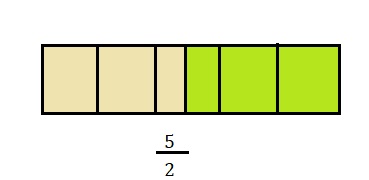
The conversion of 1.5 as a fraction hinges on two pillars: place value and simplification. The decimal 1.5 consists of a whole number (1) and a tenths place (0.5). To express this as a fraction, the tenths digit (5) becomes the numerator, while the denominator reflects its place value (10). Thus, 0.5 becomes 5/10, which simplifies to 1/2. Adding the whole number yields 1 1/2, or its improper fraction equivalent, 3/2.
This process isn’t arbitrary; it stems from the base-10 number system, where each digit’s position dictates its fractional value. The key insight is recognizing that 1.5 to a fraction requires separating the integer and decimal components, converting the latter to a fraction, and then combining them. Whether you’re working with measurements, probabilities, or financial ratios, this method ensures consistency across disciplines.
Historical Background and Evolution
The concept of 1.5 as a fraction traces back to ancient civilizations, where fractions were first used to divide resources equitably. The Babylonians, around 1800 BCE, employed a sexagesimal (base-60) system, but their fractions were cumbersome compared to the Egyptian unit fractions (e.g., 2/3 as 1/2 + 1/6). The Greeks later formalized fractions as ratios, while the Hindus and Arabs refined decimal notation during the Middle Ages. By the 16th century, European mathematicians like Simon Stevin popularized decimal fractions, making conversions like 1.5 to fraction more accessible.
Today, the transition from decimals to fractions remains a cornerstone of mathematics education. The shift reflects deeper principles: decimals excel in computation, while fractions offer intuitive ratios. For example, 1.5 as a fraction (3/2) immediately conveys that a quantity is 50% larger than the whole, a clarity lost in decimal form. Historical texts, from Euclid’s Elements to modern textbooks, underscore this duality, proving that 1.5 to a fraction is more than a calculation—it’s a linguistic tool for precision.
Core Mechanisms: How It Works
The conversion of 1.5 as a fraction follows a systematic approach. Start by identifying the decimal’s place value: 1.5 has a digit in the tenths place (5). Write this as 5/10, then simplify by dividing numerator and denominator by their greatest common divisor (GCD), which is 5. This yields 1/2. To incorporate the whole number (1), you have two options: keep it as a mixed number (1 1/2) or convert it to an improper fraction by multiplying the denominator (2) by the whole number (1) and adding the numerator (1): (1×2) + 1 = 3, resulting in 3/2.
Why both forms? Mixed numbers (1 1/2) are intuitive for measurements (e.g., 1.5 meters), while improper fractions (3/2) are essential in algebra and calculus. The choice depends on context. For instance, in baking, 1.5 cups might be expressed as 1 1/2 cups, but in a mathematical equation, 3/2 ensures consistency when multiplying or dividing. The flexibility of 1.5 to fraction conversions underscores their versatility.
Key Benefits and Crucial Impact
1.5 as a fraction isn’t just a mathematical curiosity—it’s a practical tool that enhances accuracy, simplifies comparisons, and bridges theoretical and applied disciplines. In engineering, fractions like 3/2 represent gear ratios or structural load distributions, where precision is non-negotiable. Similarly, in finance, interest rates or profit margins often rely on fractional representations to avoid rounding errors. The ability to seamlessly convert between decimals and fractions ensures that 1.5 to a fraction remains a critical skill in professions where margins matter.
Beyond technical fields, fractions offer cognitive advantages. Studies in cognitive psychology suggest that understanding fractions improves numerical reasoning, a skill linked to higher-order problem-solving. For example, visualizing 1.5 as a fraction (3/2) helps students grasp ratios, percentages, and even exponential growth—concepts foundational to economics, biology, and computer science. The conversion process itself reinforces logical thinking, as it requires breaking down problems into manageable steps.
"Fractions are the language of ratios, and ratios are the language of the universe." — Adapted from ancient Greek mathematical philosophy
Major Advantages
- Precision in Measurements: Fractions like 3/2 eliminate decimal approximations, critical in fields like carpentry or pharmaceuticals where exact dosages are required.
- Simplified Ratios: Comparing quantities (e.g., 1.5:1 vs. 3/2:1) is easier in fractional form, reducing cognitive load in statistical analysis.
- Algebraic Consistency: Improper fractions (3/2) streamline operations in equations, avoiding errors when multiplying or dividing mixed numbers.
- Historical and Cultural Relevance: Fractions like 1.5 as a fraction appear in ancient trade records, architectural blueprints, and even religious texts, reflecting their enduring utility.
- Educational Foundations: Mastery of 1.5 to fraction conversions builds confidence in handling more complex numbers, including irrational decimals and percentages.

Comparative Analysis
| Decimal Form (1.5) | Fractional Forms |
|---|---|
| Used in quick calculations (e.g., 1.5 × 2 = 3). | Mixed number (1 1/2) or improper fraction (3/2). |
| Limited precision in repeated operations (e.g., 1.5 × 0.333...). | Exact representation (3/2 × 1/3 = 1/2), avoiding rounding errors. |
| Common in everyday contexts (e.g., time: 1.5 hours). | Preferred in technical contexts (e.g., 3/2 gear ratio). |
| Easier for mental math in some cases. | Clearer for proportional relationships (e.g., 3/2 = 150%). |
Future Trends and Innovations
The relevance of 1.5 as a fraction will only grow as data-driven fields expand. Machine learning models, for instance, increasingly rely on fractional representations to optimize algorithms, where ratios like 3/2 might define learning rates or feature weights. Similarly, in quantum computing, fractional values are used to represent qubit states, highlighting the intersection of pure math and cutting-edge technology. As education shifts toward computational thinking, teaching 1.5 to fraction conversions will become even more critical, ensuring students can interpret both analog and digital data.
Emerging trends also include hybrid number systems, where decimals and fractions coexist in user interfaces (e.g., financial apps displaying 1.5 as "1½"). This blend reflects a broader movement toward intuitive yet precise numerical communication. For professionals, staying fluent in these conversions will be key to navigating fields where 1.5 as a fraction isn’t just a calculation—it’s a language.
Conclusion
The conversion of 1.5 as a fraction is more than a mathematical exercise; it’s a gateway to understanding ratios, proportions, and precision in both abstract and applied contexts. Whether you’re adjusting a recipe, analyzing financial data, or solving an engineering problem, the ability to switch between decimals and fractions like 3/2 or 1 1/2 ensures clarity and accuracy. This skill isn’t static—it evolves with technology, from ancient trade to modern algorithms, proving that the fundamentals of math remain timeless.
As you encounter 1.5 to fraction in your work or studies, remember: the goal isn’t just to perform the conversion but to recognize its role in shaping how we measure, compare, and innovate. In a world where numbers govern everything from microchip designs to global economies, mastering this conversion is a small step toward greater numerical literacy—and greater control over the data that defines our lives.
Comprehensive FAQs
Q: Why is 1.5 as a fraction sometimes written as 3/2 and other times as 1 1/2?
A: The choice depends on context. 1.5 as a fraction can be expressed as the improper fraction 3/2 for algebraic operations (e.g., multiplication) or as the mixed number 1 1/2 for practical measurements (e.g., 1.5 meters). Both are mathematically equivalent but serve different purposes.
Q: Can 1.5 as a fraction be simplified further?
A: No. The simplified form of 1.5 as a fraction is either 3/2 (improper) or 1 1/2 (mixed). Both are in their lowest terms, as 3 and 2 have no common divisors other than 1.
Q: How do I convert 1.5 to a percentage?
A: To convert 1.5 as a fraction (3/2) to a percentage, divide the numerator by the denominator (3 ÷ 2 = 1.5) and multiply by 100: 1.5 × 100 = 150%. Thus, 1.5 is 150%.
Q: Is 1.5 the same as 1 ½ in all mathematical contexts?
A: Yes, they are numerically identical. However, 1 ½ is often preferred in contexts requiring clarity (e.g., cooking), while 1.5 or 3/2 may be used in equations where decimals or improper fractions are standard.
Q: Why do some calculators show 1.5 as 3/2 instead of 1 1/2?
A: Many calculators default to improper fractions (3/2) for consistency in mathematical operations, as they avoid the ambiguity of mixed numbers during calculations. The choice is often a setting preference in advanced scientific calculators.
Q: How does 1.5 as a fraction apply in real-world scenarios?
A: In carpentry, 1.5 inches might be written as 3/2 inches for precise cuts. In finance, a 1.5% interest rate could be expressed as 3/2% to simplify compounding calculations. The fractional form ensures accuracy in fields where decimals introduce rounding errors.
Leave a Comment
Comments are moderated before appearing. The data you submit is processed according to the Privacy Policy of Vetlife Archive.