henri matisse henri matisse revolutionized modern art with bold colors and cutti
Table of Contents
- Henri Matisse: Life and Early Influences
- Biographical Timeline: From Le Cateau-Cambrésis to Paris
- Early Influences: Post-Impressionism, Pointillism, and Academic Tradition
- Visual Evolution: Early Works vs. Mature Period
- The Fauve Movement: Matisse’s Radical Shift in Color and Form
- Origins of Fauvism and Matisse’s Leadership at the 1905 Salon d’Automne
- Visual Comparisons: Pre-Fauve vs. Fauve Works
- Timeline of Fauvism: Key Exhibitions, Collaborators, and Works (1904–1908)
- Mastery of Composition: Cut-Outs and the Later Career
- The Development of Cut-Out Technique: From Confinement to Creation
- Step-by-Step Creation of The Snail (1953): A Case Study
- Comparative Analysis: Cut-Outs vs. Early Paintings
- Philosophical Underpinnings: Form, Color, and Liberation
- Architecture and Interior Design: The Influence of Space
- Matisse’s Legacy: Influence on Modern Art and Design
- Key Artists and Movements Shaped by Matisse’s Innovations
- Visual Case Studies: Matisse’s Techniques in Later Works
- Matisse’s Impact Across Design Disciplines: A Flowchart of Influence
- Matisse in Museums and Institutions: Retrospectives and Curatorial Practices
- Thematic Exploration: Recurring Motifs in Matisse’s Work and Their Evolution
- Odalisques: Exoticism and the Feminine Ideal
- Still Lifes: Simplicity and the Dance of Color
- Interiors: The Sanctuary of Color and Form
- Landscapes: The Garden as a Living Canvas
- Figures in Nature: Harmony Between Man and Environment
- Comparative Analysis: Matisse’s Motifs vs. His Contemporaries
- Preservation and Digital Engagement: Matisse’s Works Today
- Top 10 Matisse Works in Major Institutions and Their Digital Accessibility
- Digital Resources for Studying Matisse: A Comparative Table
Henri Matisse, the French master whose name became synonymous with artistic rebellion, transformed the canvas into a playground of vibrant hues and fearless experimentation. Born in 1869 in northern France, his journey from a law student to a radical painter began with a single act of defiance: rejecting convention for the raw, emotional language of color that would define Fauvism. Before his iconic Woman with a Hat (1905) sparked scandal at the Salon d’Automne, Matisse spent years absorbing influences—from the structured dots of Seurat’s pointillism to the warm palettes of Renoir—while quietly refining his own voice in sketches like Still Life with Apples (1889). This duality, between tradition and revolution, set the stage for a career that would redefine what art could be.
Matisse’s genius lay not just in his audacious use of color but in his ability to merge technique with philosophy, turning every brushstroke into a manifesto. His early works, though rooted in academic training, already hinted at the emotional intensity that would explode in his Fauve period, where arbitrary colors like cobalt blues and chrome yellows clashed with reality to evoke pure sensation. Yet even as he shattered expectations—collaborating with African art collectors, dissecting form with scissors in his later cut-outs—Matisse remained grounded in a simple truth: art should bring joy, balance, and harmony. His legacy isn’t just in the masterpieces hanging in museums but in the way he proved that creativity could be both a rebellion and a celebration.

Henri Matisse: Life and Early Influences

The journey of Henri Matisse, one of the most influential artists of the 20th century, began in a modest setting that would later shape his revolutionary approach to art. Born on December 31, 1869, in Le Cateau-Cambrésis, northern France, Matisse grew up in a family where artistic expression was not initially a priority. His father, a grain merchant, envisioned a legal career for his son, but a near-fatal appendicitis attack in 1887 altered his trajectory. During his recovery, Matisse was given art supplies to occupy his time, sparking an unexpected passion that would define his life. His move to Paris in 1891 marked the beginning of a transformative period, where he immersed himself in the city’s vibrant artistic scene, studying under Gustave Moreau at the École des Beaux-Arts. This period laid the foundation for his evolution from a traditional academic painter to a pioneer of modern art.
Biographical Timeline: From Le Cateau-Cambrésis to Paris
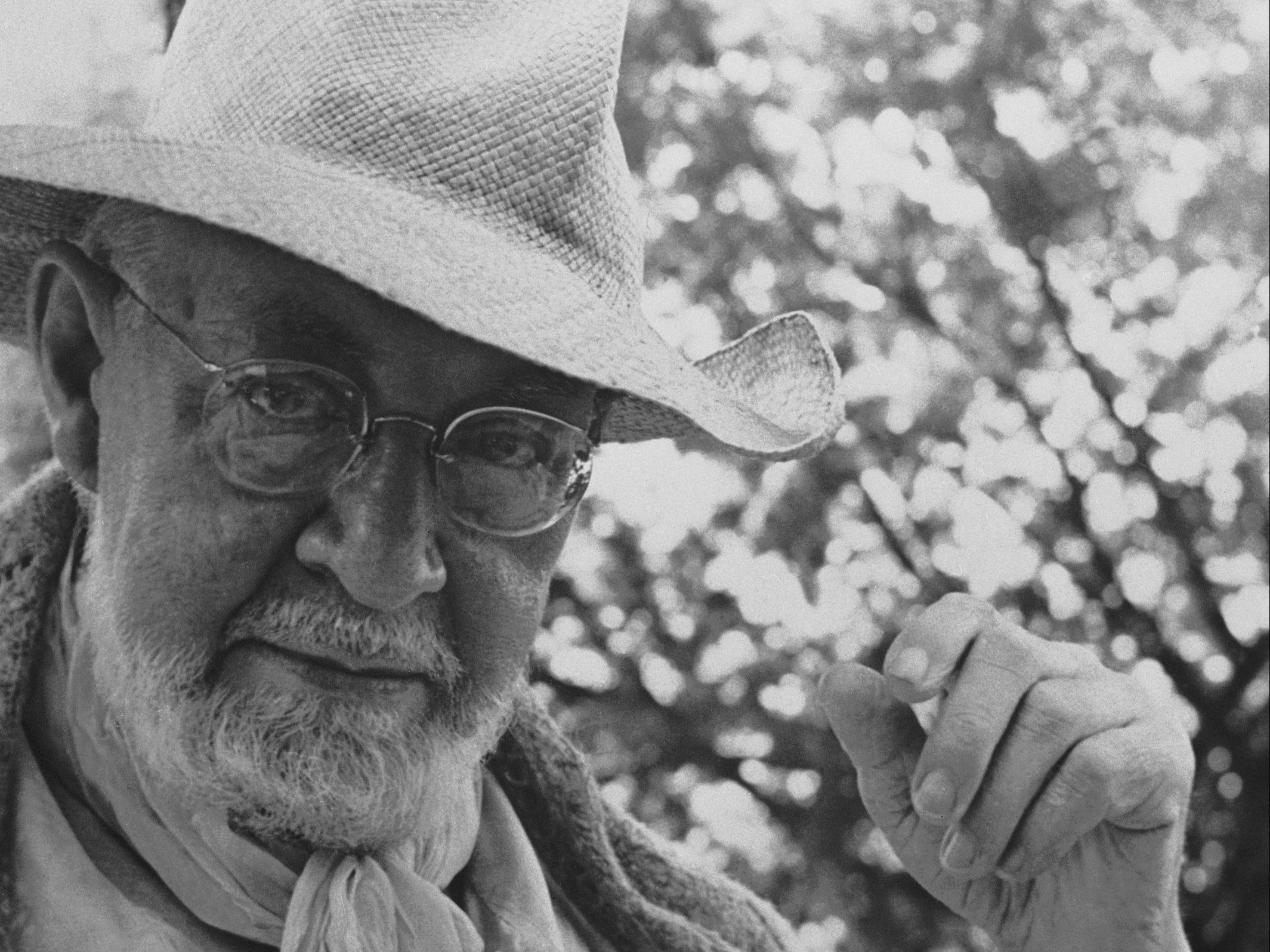
Matisse’s early life was marked by discipline and conformity, but his artistic awakening in Paris exposed him to radical ideas that would challenge conventional norms. Below is a chronological breakdown of pivotal events that shaped his development:
- 1869–1887: Childhood and Early Education Matisse spent his formative years in Le Cateau-Cambrésis, where he received a classical education. His early sketches, though unremarkable, demonstrated an aptitude for drawing. His father’s insistence on a legal career led him to study law in Paris, but his true calling remained hidden until his illness.
- 1887: The Turning Point After recovering from appendicitis, Matisse began drawing seriously, influenced by reproductions of works by Jean-Baptiste-Camille Corot and Eugène Delacroix. His first formal training came under William-Adolphe Bouguereau, a respected academic painter, whose influence is evident in his early works like Still Life with Apples (1889), characterized by meticulous detail and muted tones.
- 1891–1897: Studying Under Gustave Moreau Matisse enrolled at the École des Beaux-Arts in 1891 but soon transferred to Moreau’s private studio. Moreau’s symbolic and decorative style, evident in works like The Apparition (1876), introduced Matisse to color symbolism and compositional boldness. This period also exposed him to the Nabi group, a collective of post-impressionist artists who sought spiritual and decorative unity in their work.
- 1897–1900: The Influence of Pointillism and Seurat Matisse’s fascination with pointillism led him to study the works of Georges Seurat, particularly A Sunday Afternoon on the Island of La Grande Jatte (1884–1886). His own experiments with the technique, seen in Luxembourg Gardens (1894–1895), were short-lived but critical in his understanding of color theory and optical mixing. This period also saw his engagement with Paul Signac, another key figure in the pointillist movement.
- 1900: World’s Fair and the Birth of the Fauves The 1900 Paris World’s Fair introduced Matisse to African and Oceanic art, which would later influence his use of bold, flat colors. His painting Woman with a Hat (1905), exhibited in the Salon d’Automne, shocked critics with its vibrant hues and distorted forms, earning him the nickname "Fauve" (wild beast) along with André Derain and others.
Early Influences: Post-Impressionism, Pointillism, and Academic Tradition
Matisse’s artistic vocabulary was forged through a synthesis of post-impressionist experimentation, pointillist rigor, and academic precision. His early works reflect a tension between these influences, as he navigated the constraints of traditional training while embracing modern innovations.
- Post-Impressionism: Breaking from Impressionism’s Constraints Unlike the Impressionists, who focused on capturing fleeting light and movement, Matisse and his contemporaries sought deeper emotional and symbolic resonance. The Nabi group, with whom Matisse briefly aligned, emphasized decorative patterns and mythological themes, as seen in Moreau’s Jupiter and Semele (1895). Matisse’s The Green Stripe (1905) later echoed this decorative impulse, using bold outlines and unnatural colors to evoke emotion.
- Pointillism: The Science of Color Matisse’s study of Seurat’s scientific approach to color revealed how tiny dots of pure pigment, when viewed from a distance, blend optically to create new hues. His early pointillist works, such as Luxembourg Gardens (1894–1895), demonstrate his mastery of this technique, though he soon abandoned it in favor of expressive brushwork. The lesson he retained was the power of color harmony, which became a cornerstone of his mature style.
- Academic Training: The Legacy of Bouguereau and Delacroix Matisse’s initial training under Bouguereau instilled in him a meticulous attention to detail and anatomical accuracy, visible in Still Life with Apples (1889). This work, painted in a dark, earthy palette, contrasts sharply with his later vibrant canvases. Similarly, Delacroix’s dynamic compositions influenced Matisse’s early figure studies, such as The Dance (1909–1910), where movement and energy take precedence over realism.
Visual Evolution: Early Works vs. Mature Period
Matisse’s artistic journey is best understood through a comparative analysis of his early and later works. The table below highlights key shifts in his technique, color palette, and subject matter, illustrating his departure from academic conventions toward abstraction and emotional expression.
| Work | Year | Style/Technique | Color Palette | Subject & Composition |
|---|---|---|---|---|
| Still Life with Apples | 1889 | Academic realism; meticulous brushwork; high detail | Muted earth tones; limited contrast | Static, symmetrical arrangement; emphasis on texture and volume |
| Luxembourg Gardens | 1894–1895 | Pointillism; precise dot application; scientific approach | Bright, contrasting hues; optical mixing | Geometric patterns; structured, almost mathematical composition |
| Woman with a Hat | 1905 | Fauve; bold, expressive brushstrokes; flat areas of color | Vibrant, unnatural hues; high contrast | Distorted forms; dynamic, decorative patterns; emphasis on color over form |
| The Dance | 1909–1910 | Fauvist abstraction; simplified shapes; rhythmic movement | Warm, harmonious tones; limited palette with bold accents | Abstracted figures; circular composition; emphasis on rhythm and energy |
| The Snail | 1953 | Cut-out technique; collage; precise scissor work | Vibrant, flat colors; high saturation | Abstracted organic forms; playful, almost childlike composition |
The progression from Still Life with Apples to The Snail demonstrates Matisse’s liberation from realism, culminating in a synthesis of color, form, and emotion that defined his
The Fauve Movement: Matisse’s Radical Shift in Color and Form
Henri Matisse’s transformation into a pioneer of modern art crystallized in the Fauve Movement, a radical departure from traditional representation that redefined visual language through bold color and dynamic form. Emerging in the early 1900s, Fauvism was not merely a stylistic shift but a defiant rejection of academic conventions, with Matisse at its forefront. The movement’s name—derived from the French word fauve (wild beast)—was coined by critics who were stunned by its unbridled intensity. At the heart of this revolution were Matisse’s works, particularly those exhibited at the 1905 Salon d’Automne, where Woman with a Hat and Luxe, Calme et Volupté became symbols of a new artistic era. These paintings, with their vibrant, almost aggressive hues, provoked outrage and fascination, cementing Fauvism’s place in art history as a turning point between Impressionism and modern abstraction.
The Fauve period marked Matisse’s embrace of arbitrary color, where pigments were chosen for their emotional resonance rather than their fidelity to nature. This approach, combined with simplified forms and expressive brushwork, created a visual language that prioritized sensation over realism. The movement’s legacy lies not only in its aesthetic innovations but also in its challenge to the established hierarchy of color and subject matter, paving the way for future avant-garde movements.
Origins of Fauvism and Matisse’s Leadership at the 1905 Salon d’Automne
Fauvism emerged from a confluence of artistic experimentation in Paris, where Matisse, André Derain, Maurice de Vlaminck, and others sought to liberate color from its descriptive role. The movement’s origins trace back to 1904–1905, when Matisse and his circle began painting with unmodulated, high-saturation colors that clashed with the muted palettes of Impressionism. Their goal was to evoke mood and energy rather than replicate optical reality, a radical departure from the academic tradition that valued tonal harmony and naturalism.
The 1905 Salon d’Automne became the catalyst for Fauvism’s public debut. Organized as an alternative to the conservative Salon des Beaux-Arts, the exhibition included works by Matisse, Derain, and others that were immediately labeled as fauve by critic Louis Vauxcelles, who famously dismissed them as "a pot of paint flung in the face of the public." Two of Matisse’s paintings—Woman with a Hat (1905) and Luxe, Calme et Volupté (1904)—became the movement’s manifesto. In Woman with a Hat, the subject’s face is rendered in jagged, green and blue planes, while her hat erupts in a riot of purple and green, defying anatomical accuracy. Luxe, Calme et Volupté features a reclining nude draped in a red sheet, her skin a stark blue-green, creating a dissonance that challenged viewers’ expectations of flesh tones. These works were not merely stylistic choices but deliberate provocations, forcing audiences to confront the emotional power of color over representation.
Matisse’s leadership in Fauvism was defined by his ability to synthesize theoretical ideas with visceral experimentation. Unlike his contemporaries, who often embraced chaos, Matisse sought harmony through discord, using color to create a sense of equilibrium. His influence extended beyond painting; he encouraged fellow Fauves to explore bold compositions, such as Derain’s expressive landscapes and Vlaminck’s thick, impasto brushstrokes. By 1906, the movement had solidified, with Matisse’s Portrait of Madame Matisse (1905) and The Green Stripe (1905) further pushing the boundaries of form and color.
Visual Comparisons: Pre-Fauve vs. Fauve Works
The transition from Matisse’s pre-Fauve period to his Fauve works reveals a seismic shift in artistic philosophy. Before 1904, Matisse’s paintings, such as The Open Window (1905, though technically a transitional work), retained elements of Impressionist technique, with softer edges and a more restrained palette. In contrast, his Fauve works abandoned these conventions in favor of flat, decorative planes and unnatural color harmonies.
Consider The Green Stripe (1905), a portrait of Madame Matisse where her face is divided into geometric segments of green, red, and blue. The green stripe—an arbitrary choice—dominates her forehead and cheek, creating a stark contrast with her red lips and black hair. This composition differs dramatically from his earlier Woman in a Hat (1896), where the subject is rendered in naturalistic tones with subtle modeling. The Fauve version eliminates depth, replacing it with a rhythmic interplay of color that demands the viewer’s attention. Similarly, Luxe, Calme et Volupté contrasts with The Bath (1905, a later work but stylistically distinct), where the figure’s form is still grounded in anatomical accuracy. In the Fauve piece, the reclining nude’s body is reduced to basic shapes, her skin a cool blue-green that clashes with the warm red of her drapery, evoking a sense of sensuality through pure color.
These comparisons underscore Fauvism’s rejection of optical realism. Matisse’s use of complementary colors—such as red and green in The Green Stripe—was not intended to mimic nature but to create a visual symphony. The emotional impact of these works lies in their ability to provoke immediate reactions, bypassing the need for narrative or detailed depiction.
Timeline of Fauvism: Key Exhibitions, Collaborators, and Works (1904–1908)
The evolution of Fauvism from a loose association of artists to a recognized movement can be mapped through exhibitions, collaborations, and seminal works. Below is a chronological overview of its development:
| Year | Event/Exhibition | Key Collaborators | Notable Works | Significance |
|---|---|---|---|---|
| 1904 | Private Studio Gatherings | André Derain, Maurice de Vlaminck, Albert Marquet | Matisse: Luxe, Calme et Volupté; Derain: The Turning Road, L’Estaque | Early experiments with arbitrary color and simplified forms; artists begin painting en plein air with bold palettes. |
| 1905 | Salon d’Automne (Paris) | Derain, Vlaminck, Kees van Dongen | Matisse: Woman with a Hat, The Green Stripe; Derain: Woman with a Fan | Fauvism is publicly labeled; works are derided as "wild beasts," but the term becomes a badge of honor. |
| 1906 | Salon des Indépendants (Paris) | Derain, Vlaminck, Raoul Dufy | Matisse: Portrait of Madame Matisse (The Green Line); Derain: The London Bridge | Fauve influence spreads; Derain’s landscapes become more abstract, while Matisse refines his use of line and color. |
| 1907 | ||||
| 1907 | Salon d’Automne (Paris) | Derain, Vlaminck, Henri Manguin | Matisse: Dance (I); Derain: The Pool at Chatou | Fauvism reaches its peak; Dance becomes a manifesto for the movement’s emphasis on rhythm and color. |
| 1908 | Salon des Indépendants (Paris) | Derain, Vlaminck, Georges Braque | Matisse: The Red Studio; Derain: The Port of Collioure | Fauvism begins to fragment; Matisse shifts toward more structured compositions, while Derain explores Cubist influences. |
This timeline illustrates Fauvism’s rapid ascension and decline, with its core years (190
Mastery of Composition: Cut-Outs and the Later Career
Henri Matisse’s later years marked a revolutionary transformation in his artistic approach, driven by physical constraint and creative reinvention. After a near-fatal abdominal surgery in 1941 at age 71, Matisse faced prolonged recovery, confining him to a wheelchair and limiting his ability to paint with traditional techniques. This period became the catalyst for his exploration of gouaches découpées—cut-outs—where paper, scissors, and color redefined his mastery of composition. The process liberated his work from the physical demands of painting, allowing him to manipulate form, space, and abstraction with unprecedented precision. By the early 1950s, Matisse’s cut-outs evolved into a distinct body of work, blending technical innovation with philosophical depth, culminating in a synthesis of architecture, interior design, and pure visual poetry.
The Development of Cut-Out Technique: From Confinement to Creation
Matisse’s shift to cut-outs began as a necessity but soon became an artistic imperative. Post-surgery, he experimented with colored paper, scissors, and glue, transforming two-dimensional shapes into dynamic compositions. His method involved meticulous planning: he sketched designs on graph paper, then transferred them to large sheets of gouache-painted paper (often hand-cut by assistants). The process required collaboration, particularly with Lydia Delectorskaya, his devoted assistant, who helped assemble and refine the works. Tools included precise scissors, X-Acto knives, and a light table for alignment, while paper types ranged from heavyweight Japanese washi to vibrant, hand-painted sheets. The technique demanded patience—each cut-out could take weeks, with layers of shapes overlapping to create depth.
The evolution of his cut-outs can be traced through key phases: - 1941–1943: Early experiments with simple, flat compositions, such as Memory of Oceania (1946), where geometric forms and bold colors dominated. - 1947–1950: Introduction of more complex layering and movement, evident in The Snail (1953), where organic shapes (like the snail’s shell) interact with architectural elements. - 1950–1954: Fully realized cut-outs incorporating architectural motifs, such as The Swimming Pool (1952), which integrated interior design principles into abstract forms.
Matisse’s process was both tactile and intellectual, blending craftsmanship with theoretical rigor. He described the method as "drawing with scissors", emphasizing how the act of cutting freed form from the constraints of brushstrokes. This liberation allowed him to explore space in ways impossible with paint, where negative space became as vital as positive shapes.
Step-by-Step Creation of The Snail (1953): A Case Study
The Snail exemplifies Matisse’s mastery of cut-out composition, where a single organic form dominates a vibrant, architectural backdrop. The creation involved: 1. Conceptualization: Matisse sketched the snail’s spiral shell and surrounding elements on graph paper, refining proportions and overlaps. 2. Paper Preparation: Sheets of gouache-painted paper (primarily blues, greens, and yellows) were cut into individual shapes—some pre-cut by assistants, others hand-cut by Matisse for precision. 3. Layering and Assembly: Shapes were arranged on a backing board, with the snail’s shell positioned centrally. Translucent layers created depth, while overlapping colors intensified visual rhythm. 4. Final Adjustments: Matisse used a magnifying glass to inspect details, ensuring alignment and balance. The work was then affixed to canvas or mounted on paper, often with a protective varnish.
Delectorskaya’s role was critical; she recalled assisting Matisse by holding paper steady while he cut, or positioning shapes to test compositions. The collaboration blurred the line between artist and craftsman, reflecting Matisse’s belief that "creativity is not found but made".
Comparative Analysis: Cut-Outs vs. Early Paintings
Matisse’s cut-outs represent a radical departure from his earlier paintings, particularly in their use of space, movement, and abstraction. Below is a comparative analysis of four works:
| Element | The Green Stripe (1905, Painting) | The Snail (1953, Cut-Out) | The Swimming Pool (1952, Cut-Out) | Luxury, Calm, and Pleasure (1904–05, Painting) |
|---|---|---|---|---|
| Space | Flat, with minimal depth; figures emerge from a single plane. | Multi-layered; negative space defines the snail’s movement within architectural frames. | Architectural grids create a 3D illusion, with overlapping shapes suggesting depth. | Decorative, with figures arranged in a static, patterned composition. |
| Movement | Implied through brushwork and color contrast (e.g., green stripe’s dynamism). | Organic flow; the snail’s spiral suggests motion, while cut edges create rhythm. | Rhythmic layering mimics water’s undulation, with shapes "floating" in space. | Static; figures are frozen in a decorative tableau. |
| Abstraction | Representational with expressive distortion (Fauve influence). | Highly abstract; form is reduced to essential shapes, prioritizing color and line. | Near-abstract; architectural elements dissolve into pure composition. | Decorative abstraction; figures are stylized but recognizable. |
| Color Constraints | Color dominates form; brushstrokes define edges. | Color is liberated—shapes are defined by cuts, not strokes. | Color interacts with cut edges, creating luminous effects. | Color is applied in flat, unmodulated fields. |
The table reveals how cut-outs prioritized structural clarity and spatial experimentation, moving beyond the emotional intensity of his earlier Fauve works. In The Snail, for example, the snail’s shell is not just a form but a kinetic element, its spiral cutting through architectural planes. This contrasts with The Green Stripe, where movement is suggested through color clashes rather than physical manipulation of space.
Philosophical Underpinnings: Form, Color, and Liberation
Matisse’s cut-outs embodied his lifelong pursuit of "the essential", a principle he articulated in writings and interviews. He viewed the technique as a means to "eliminate all that is not essential"—stripping art to its purest visual language. His famous quote captures this philosophy:
"Cutting is more direct than drawing. One uses large areas of flat color and eliminates all that is not necessary."
The process also challenged traditional hierarchies between form and color. In paintings, color often dictated form; in cut-outs, form became autonomous, with color serving as a secondary but equally vital layer. This shift aligned with his belief that "the role of the artist is to create order"—order achieved through the precise arrangement of shapes and hues.
Matisse’s exploration of negative space was particularly groundbreaking. In The Swimming Pool, for example, the empty areas between cut-out figures become active participants in the composition, creating a sense of floating weightlessness. This approach influenced later abstract artists, including Henri Michaux and Alexander Calder, who saw in Matisse’s work a model for dematerializing the figure.
Architecture and Interior Design: The Influence of Space
Matisse’s later compositions were deeply intertwined with his interest in architecture and interior design, a collaboration that began with his friendship with architect Eileen Gray. Gray’s minimalist furniture and spatial designs—seen in her E-1027 house—inspired Matisse’s use of modular grids and proportional harmony in his cut-outs. Works like The Swimming Pool (1952) reflect this influence: - The composition mimics an open-plan interior, with shapes arranged like furniture or architectural partitions. - Rectangular cut-outs evoke windows or doorways, while organic forms (e.g., the swimmer’s silhouette) interact with geometric frames. - The use of
Matisse’s Legacy: Influence on Modern Art and Design
Henri Matisse’s impact on 20th-century art transcends his own era, embedding itself into the DNA of modern and contemporary artistic practices. His fearless manipulation of color, form, and composition dismantled traditional boundaries, inspiring generations of artists to prioritize emotional expression over rigid realism. From abstract expressionism to pop art, and even digital design, Matisse’s techniques—such as bold color contrasts, simplified shapes, and dynamic compositions—became foundational. His influence extended beyond painting into commercial design, fashion, and stage production, proving that art could be both revolutionary and accessible. Museums worldwide now curate his works as cornerstones of modernism, while his collaborations with industries like textiles and ceramics demonstrate how artistic innovation could merge with mass production. Artists who studied or worked alongside him often cited his studio as a crucible for creativity, where experimentation and spontaneity were paramount.
Key Artists and Movements Shaped by Matisse’s Innovations
Matisse’s revolutionary approach to color and form directly fueled movements that redefined modern art, including abstract expressionism, pop art, and even contemporary illustration. His emphasis on color as an independent element—rather than a tool for realism—echoed in the works of Mark Rothko and Willem de Kooning, who pushed boundaries in abstract painting. Rothko’s luminous color fields, for instance, owe a debt to Matisse’s ability to evoke mood through hue alone, while de Kooning’s gestural brushwork reflects Matisse’s later emphasis on intuitive, physical engagement with paint. In pop art, Andy Warhol adopted Matisse’s bold, flat colors and repetitive motifs, transforming them into mass-produced icons like his Marilyn Diptych (1962), which mirrors Matisse’s The Green Stripe (1905) in its simplified, high-contrast aesthetic. Even contemporary illustrators, such as Jean-Michel Basquiat and Takashi Murakami, incorporate Matisse’s playful yet structured compositions, blending street art with refined technique.
Matisse’s influence also permeated graphic design and illustration, where his use of negative space and bold outlines became staples. Designers like Paul Rand and Saul Bass employed Matisse’s principles to create iconic logos and film posters, prioritizing clarity and visual impact over ornate detail. The Bauhaus movement, though distinct in its functionalist approach, absorbed Matisse’s color theory, particularly in the works of Josef Albers, who explored chromatic interactions in his Homage to the Square series. Even digital artists today, such as those in the low-poly and pixel art communities, draw from Matisse’s reductionist forms, translating his two-dimensional simplicity into three-dimensional digital spaces.
Visual Case Studies: Matisse’s Techniques in Later Works
A direct comparison reveals how Matisse’s innovations were absorbed and reinterpreted by later artists. For example, Warhol’s Marilyn Diptych (1962) mirrors Matisse’s The Green Stripe (1905) in its repetitive, high-contrast color blocks, but Warhol’s work extends this into serial imagery, a hallmark of pop art. Both artists use flat, unmodulated colors to create an almost graphic quality, though Warhol’s silkscreen technique introduces a mechanical, mass-produced aesthetic absent in Matisse’s hand-painted strokes.
In abstract expressionism, Rothko’s No. 61 (Rust and Blue) (1953) echoes Matisse’s The Red Studio (1911) in its field-like color planes, but Rothko’s work is more monumental and meditative, stripping away Matisse’s narrative elements to focus solely on emotional resonance. Similarly, de Kooning’s Woman I (1950–52) reflects Matisse’s dynamic, almost sculptural forms, though de Kooning’s brushwork is more aggressive and less controlled, embodying the raw energy of abstract expressionism.
Contemporary illustrators like Yoko Honda and Julie Bell also engage with Matisse’s legacy, using bold outlines and limited palettes to create works that feel both timeless and modern. Honda’s character designs, for instance, often feature Matisse-esque color blocking, while Bell’s editorial illustrations employ simplified, graphic compositions that recall Matisse’s cut-outs.
Matisse’s Impact Across Design Disciplines: A Flowchart of Influence
Matisse’s reach extends beyond fine art into graphic design, fashion, and digital media, where his principles of simplification and color harmony remain influential. The following table traces his impact across these fields, with key examples:
| Field | Matisse’s Contribution | Influenced Artists/Designers | Notable Examples |
|---|---|---|---|
| Graphic Design | Use of bold typography, asymmetrical layouts, and flat color to create visual impact. | Paul Rand, Saul Bass, Milton Glaser | Rand’s IBM logo (1956) and Bass’s Vertigo poster (1958) employ Matisse’s dynamic compositions and limited palettes. |
| Influence on Swiss Style (International Typographic Style) through emphasis on hierarchy and clarity. | Josef Müller-Brockmann, Armin Hofmann | Müller-Brockmann’s Olympic posters reflect Matisse’s clean lines and color contrast. | |
| Fashion | Color blocking and geometric patterns, breaking from traditional fashion silhouettes. | Yves Saint Laurent, Sonia Rykiel | Saint Laurent’s Mondrian dress (1965) and Rykiel’s structured, colorful designs mirror Matisse’s bold, unapologetic use of color. |
| Collaboration with textile designers, including Hermès, to create limited-edition fabrics with Matisse-inspired motifs. | Hermès, Christian Lacroix | Hermès’ Matisse-inspired scarves (1950s) and Lacroix’s theatrical, pattern-heavy collections draw from Matisse’s playful yet refined aesthetic. | |
| Digital Art | Pixel art and low-poly design, where Matisse’s simplified forms translate into digital mediums. | Takashi Murakami, Beeple (Mike Winkelmann) | Murakami’s Superflat movement and Beeple’s Everydays series use Matisse-like color saturation and geometric reduction. |
| 3D modeling and animation, where Matisse’s cut-out techniques inspire stylized, two-dimensional digital characters. | Hayao Miyazaki, Studio Ghibli | Miyazaki’s Spirited Away (2001) features Matisse-esque color palettes and simplified backgrounds. |
Matisse in Museums and Institutions: Retrospectives and Curatorial Practices
Matisse’s work has been canonized in major institutions, with retrospectives at the Museum of Modern Art (MoMA, 1951) and the Centre Pompidou (1984) cementing his status as a modern master. The 1951 MoMA retrospective, organized by Alfred H. Barr Jr., was one of the first large-scale exhibitions to elevate modern art to the level of classical masterworks, setting a precedent for how museums would later display avant-garde movements. Barr’s curation emphasized thematic groupings, a practice now standard in contemporary exhibitions, such as the Tate Modern’s "Matisse: The Cut-Outs" (2014), which explored his late-career innovation through interactive displays.
Matisse’s influence also reshaped curatorial practices, encouraging museums to focus on artistic processes over historical narratives. For instance, the Metropolitan Museum of Art’s
Thematic Exploration: Recurring Motifs in Matisse’s Work and Their Evolution
Henri Matisse’s oeuvre is defined by a series of recurring motifs that evolved alongside his artistic experimentation, reflecting both personal obsessions and broader cultural influences. From the sensual curves of odalisques to the serene stillness of interiors, each theme served as a canvas for his mastery of color, form, and emotional expression. These motifs were not merely aesthetic choices but deeply symbolic, shaped by travels, health struggles, and philosophical reflections on art’s role in life. By examining five key themes—odalisques, still lifes, interiors, landscapes, and figures in nature—this section traces their transformation across his career, revealing how Matisse used repetition to refine his visual language while maintaining a dialogue with tradition and modernity.
Odalisques: Exoticism and the Feminine Ideal
Matisse’s fascination with odalisques—concubines in a harem—emerged from his 1912–1913 travels to North Africa, where he encountered the vibrant colors and fluid forms of Islamic art. Unlike Western depictions of the nude, which often emphasized anatomical precision, Matisse’s odalisques became abstracted, sensuous figures draped in flowing fabrics or reclining in luxurious interiors. Early works like Odalisque with a Tattooed Arm (1907) introduced bold, unnatural hues and elongated proportions, challenging the boundaries between figure and background. By the 1920s, his odalisques in The Green Stripe (1909) and The Yellow Odalisque (1923) evolved into flattened, almost two-dimensional forms, prioritizing decorative harmony over realism.
The motif’s cultural context is critical: Matisse’s odalisques were not eroticized in the Orientalist tradition but instead celebrated as symbols of freedom and sensuality. His use of red—often in the drapery or the figure’s skin—evoked energy and passion, while blue in the backgrounds suggested tranquility, creating a tension between desire and repose. These works also reflected his personal life, particularly his relationship with Russian model Lydia Delectorskaya, who frequently posed for him.
"I want to express the grandeur of the human body, but I want to do it in a way that is decorative, that is beautiful." —Henri Matisse, Notes of a Painter (1908)
Still Lifes: Simplicity and the Dance of Color
Still lifes occupied Matisse throughout his career, serving as a laboratory for his explorations of color and composition. His early still lifes, such as The Red Room (1908), were radical in their use of complementary colors—reds clashing with greens—to create dynamic visual rhythms. Unlike the static arrangements of traditional still lifes, Matisse’s compositions often appeared to vibrate, with objects like fruit or vases becoming almost abstract shapes. By the 1920s, works like Still Life with Apples (1911) and The Pink Studio (1919) demonstrated his mastery of color harmony, where each hue contributed to the overall emotional tone rather than mimicking reality.
The motif’s evolution mirrored Matisse’s shift toward simplicity and balance. His later still lifes, such as those in the cut-out series, reduced forms to their essential lines, emphasizing negative space as a creative force. The cultural context here lies in his rejection of Cubism’s fragmentation; Matisse sought to unite rather than dissect, using still lifes as a means to explore the interplay between warm and cool tones, light and shadow, and stability and movement.
Interiors: The Sanctuary of Color and Form
Interiors became Matisse’s refuge, particularly after his 1917 move to Nice, where he designed his own home and studio. Works like The Red Studio (1911) and The Pink Studio (1919) transformed domestic spaces into vibrant, almost theatrical environments. Unlike the muted tones of traditional interior paintings, Matisse’s studios were awash in primary colors, with furniture, walls, and even shadows contributing to a symphony of hue. His interiors were not mere backgrounds but active participants in the composition, often framing his other motifs—such as nudes or still lifes—within a larger narrative of harmony and order.
The motif’s personal context is profound: these spaces were extensions of Matisse’s philosophy of art as a sanctuary. After a near-fatal appendectomy in 1911, he wrote that his studio was a place of recovery and creativity, where color could "soothe the soul." His later cut-out interiors, such as The Swimming Pool (1952), further abstracted these spaces, turning them into geometric puzzles that celebrated the interplay of light and form.
Landscapes: The Garden as a Living Canvas
Matisse’s landscapes were deeply tied to his garden in Nice, which he cultivated as a living studio. Early works like Open Window, Collioure (1905) captured the luminous Mediterranean light, using blue and green to evoke the sea and sky. However, his later landscapes, such as those in the cut-out series, abandoned realism entirely. The Snail (1953) and The Sheep (1951) transformed natural elements into stylized, almost childlike forms, reflecting his belief that art should be accessible and joyful.
The cultural influence here is dual: Matisse’s garden was both a personal retreat and a response to the Provençal landscape, which he saw as a source of vitality and simplicity. His use of bold outlines and flat colors in these works also engaged with the Fauvist legacy, but with a greater emphasis on emotional resonance over shock value. Unlike Cézanne’s structured landscapes or Monet’s impressionistic flecks of light, Matisse’s gardens were dreamlike, blending reality with imagination.
Figures in Nature: Harmony Between Man and Environment
Matisse’s depictions of figures in nature evolved from the dynamic, almost violent poses of The Back (1909) to the serene, floating forms of his late cut-outs. Early works like The Dance (1909–1910) used curvilinear compositions to suggest movement and joy, while later figures, such as those in Large Reclining Nude (1952), became weightless and decorative, emphasizing balance and grace. This transformation reflects Matisse’s growing interest in Asiatic art, particularly Japanese woodblock prints, which influenced his use of asymmetry and negative space.
A comparison with contemporaries reveals key differences: while Picasso’s Les Demoiselles d’Avignon (1907) fragmented the female form into angular, primal shapes, Matisse’s figures remained fluid and sensual, prioritizing harmony over disruption. Similarly, Modigliani’s elongated nudes conveyed melancholy and fragility, whereas Matisse’s figures exuded confidence and vitality, even in their most abstract forms.
Comparative Analysis: Matisse’s Motifs vs. His Contemporaries
A table comparing Matisse’s representations of nudes and figures across his career highlights his unique approach to abstraction and emotion:
| Work | Year | Medium | Form and Composition | Color Symbolism | Emotional Tone |
|---|---|---|---|---|---|
| The Back | 1909 | Oil on canvas | Dynamic, twisting pose; bold outlines | Red (energy), green (vitality) | Intensity, sensuality |
| Odalisque with a Tattooed Arm | 1907 | Oil on canvas | Elongated proportions; flattened space | Blue (calm), orange (warmth) | Exoticism, tranquility |
| Large Reclining Nude | 1952 | Cut-out (gouache on paper) | Geometric, weightless; minimal lines | Pastel hues (softness), black (definition) | Serenity, abstraction |
Leave a Comment
Comments are moderated before appearing. The data you submit is processed according to the Privacy Policy of Salt.