Gabon vs Ivory Coast: Africa’s Hidden Rivals in Culture, Economy & Global Influence
Table of Contents
- The Complete Overview of Gabon vs Ivory Coast
- Historical Background and Evolution
- Core Mechanisms: How It Works
- Key Benefits and Crucial Impact
- Major Advantages
- Comparative Analysis
- Future Trends and Innovations
- Conclusion
- Comprehensive FAQs
- Q: Which country has a stronger economy, Gabon or Ivory Coast?
- Q: Is Gabon safer than Ivory Coast for travelers?
- Q: How do their currencies compare?
- Q: Which nation has better healthcare?
- Q: Can businesses thrive in both countries?
- Q: What’s the biggest cultural difference?
- Q: How do their diasporas compare?
- Q: Which country is better for expats?
- Q: How do their education systems rank?
- Q: Which nation is more environmentally conscious?
When mapping Africa’s economic and cultural landscapes, two nations often emerge as case studies in divergent trajectories: Gabon and Ivory Coast. Both are oil-rich, francophone powerhouses, yet their paths—one rooted in stability and elite governance, the other in volatile resilience—tell a story of Africa’s fragmented progress. While Ivory Coast’s cocoa-driven boom fuels its reputation as the continent’s fastest-growing economy, Gabon’s petrodollar wealth has carved a niche as a quiet diplomatic hub, its capital, Libreville, dazzling with skyscrapers and European-style sophistication. The Gabon vs Ivory Coast dynamic isn’t just about GDP or GDP per capita; it’s a microcosm of how geography, colonialism, and leadership shape national identity.
Yet beneath the surface, tensions simmer. Ivory Coast’s post-civil war recovery has positioned it as the "Emerald of Africa," its Abidjan skyline a testament to Chinese investment and local ambition. Meanwhile, Gabon’s political dynasty—now in its fourth generation—faces scrutiny over transparency, even as its forests remain among the world’s most biodiverse. The rivalry isn’t overt, but it’s palpable: a contest between raw potential (Ivory Coast) and institutional endurance (Gabon). For businesses, investors, and travelers, understanding these contrasts isn’t just academic—it’s strategic.
The Gabon vs Ivory Coast narrative also exposes deeper fractures in Africa’s unity. While both nations share linguistic ties to France and membership in regional blocs like the African Union, their economic models diverge sharply. Ivory Coast’s agricultural export powerhouse clashes with Gabon’s resource-dependent economy, where timber and oil dominate. Even their global alliances differ: Ivory Coast leans toward BRICS-aligned partnerships, while Gabon maintains closer ties to Western powers. The question isn’t which is "better," but how their contrasting approaches to governance, trade, and diplomacy could redefine West and Central Africa’s role in the 21st century.

The Complete Overview of Gabon vs Ivory Coast
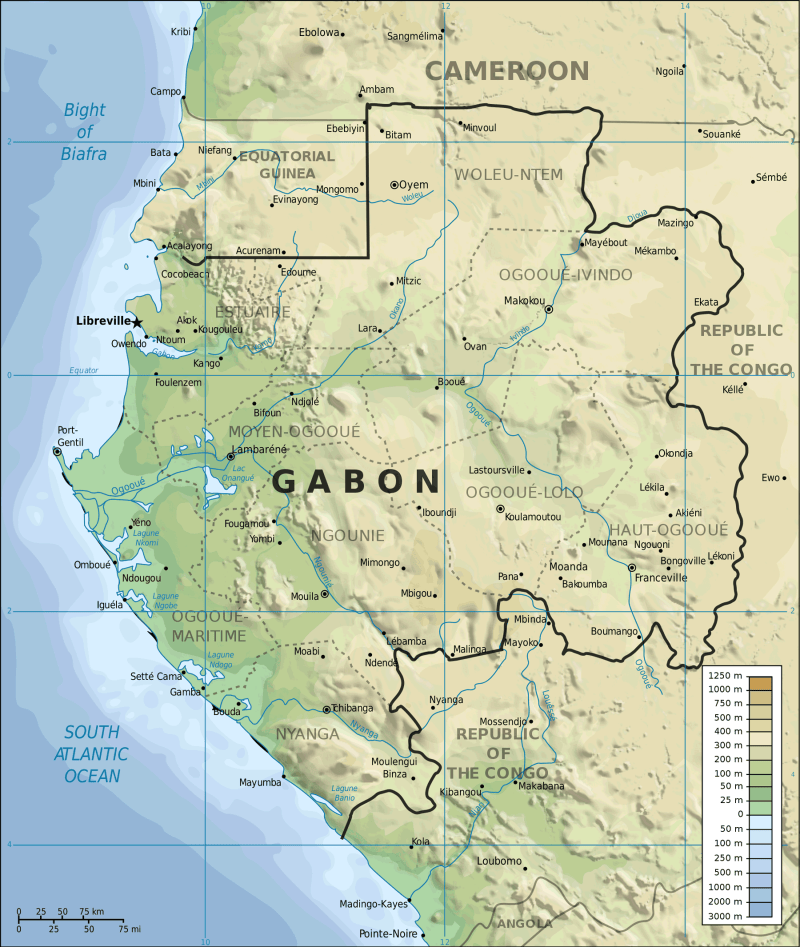
The debate over Gabon vs Ivory Coast hinges on three pillars: economic structure, political stability, and cultural influence. Gabon, a small but strategically located nation on the Atlantic, has long been Africa’s petro-state par excellence, with oil accounting for nearly 45% of GDP and 80% of exports. Its elite-driven governance, centered in Libreville, has fostered infrastructure projects like the China-backed Libreville 2022 skyline overhaul, but also criticism over corruption and inequality. Ivory Coast, by contrast, is Africa’s cocoa titan—producing 40% of the world’s supply—and its post-2011 recovery has turned Abidjan into a bustling commercial hub, albeit one still grappling with ethnic tensions and infrastructure gaps.
Culturally, the divide is equally striking. Gabon’s Bantu heritage, blended with French colonialism, produces a cosmopolitan elite culture—think high-end art galleries in Libreville and a music scene blending soukous with Afrobeat. Ivory Coast’s Yoruba and Akan influences, meanwhile, fuel a more populist creativity, from the global fame of artists like Alpha Blondy to the vibrant dabéti dance tradition. Even their sports rivalries reflect national pride: Gabon’s football team, though less dominant, boasts a passionate following, while Ivory Coast’s "Elephants" are African Cup of Nations contenders. The Gabon vs Ivory Coast comparison isn’t just statistical—it’s a clash of identities, each nation staking its claim in Africa’s cultural renaissance.
Historical Background and Evolution
The roots of the Gabon vs Ivory Coast divide trace back to colonialism. Gabon, a former French protectorate, was integrated into the Afrique Équatoriale Française (AEF), a region governed as an extension of Paris’s administrative efficiency. Its oil discoveries in the 1970s transformed it into a petro-monarchy, with the Bongo family (now Ali Bongo Ondimba) consolidating power through patronage. Ivory Coast, meanwhile, was part of the Afrique Occidentale Française (AOF), where French interests prioritized cash crops like cocoa. Its post-independence struggles—culminating in the 2002–2007 civil war—left scars that still influence its political landscape today.
Economically, the paths diverged sharply after independence. Gabon’s oil wealth allowed it to avoid the debt crises plaguing many African nations, while Ivory Coast’s reliance on cocoa made it vulnerable to global commodity price swings. The 1990s saw Gabon’s economy stagnate as oil prices dipped, forcing structural adjustments, whereas Ivory Coast’s cocoa boom in the 2010s propelled it into the top 10 African economies. Today, the Gabon vs Ivory Coast economic narrative is one of resilience: Gabon’s stability amid volatility versus Ivory Coast’s high-risk, high-reward growth model.
Core Mechanisms: How It Works
The functional differences between Gabon and Ivory Coast stem from their resource endowments and governance models. Gabon’s economy operates like a leveraged institution: oil revenues fund public salaries, infrastructure, and elite networks, but with minimal trickle-down effects. The state’s dominance in sectors like timber and mining creates a rentier economy, where GDP growth doesn’t always translate to poverty reduction. Ivory Coast, conversely, thrives on a more decentralized, export-driven model. Its cocoa cooperatives and agricultural exports employ millions, though labor rights and child labor remain contentious issues.
Politically, Gabon’s system is a hybrid of presidentialism and oligarchy, with power concentrated in Libreville’s elite circles. Ivory Coast’s multiparty democracy, while flawed, allows for competitive elections (e.g., the 2020 vote that saw Alassane Ouattara’s re-election amid protests). Both nations grapple with corruption, but Gabon’s opacity contrasts with Ivory Coast’s more transparent (though still imperfect) public procurement systems. The Gabon vs Ivory Coast governance gap highlights a broader African dilemma: whether stability requires authoritarian control or whether democracy can deliver sustainable growth.
Key Benefits and Crucial Impact
The Gabon vs Ivory Coast comparison reveals two distinct pathways to African development. Gabon’s strength lies in its macroeconomic stability—a rare commodity in a region prone to coups and economic shocks. Its currency, the CFA franc, is pegged to the euro, insulating it from inflation crises, while its infrastructure (e.g., the China-built China-Gabon Economic and Cultural Cooperation Zone) attracts foreign direct investment. Ivory Coast’s advantage is its demographic dividend: a young, growing population that fuels its consumer market and agricultural productivity. Both models offer lessons, but their impacts are uneven.
Culturally, Ivory Coast’s global soft power—through music, film (e.g., Atlantics), and diaspora networks—outshines Gabon’s. Yet Gabon’s ecological richness (home to 85% of Central Africa’s forests) and its role as a biodiversity hotspot give it a unique environmental leverage. The Gabon vs Ivory Coast rivalry isn’t zero-sum; it’s a dialogue about what Africa’s future could look like when two nations with similar colonial legacies choose different roads.
"Gabon is a country where the elite live like kings, while Ivory Coast’s middle class is still fighting to become kings." — African Economic Outlook 2023
Major Advantages
- Gabon’s Stability: Political continuity since 1967 (despite recent protests) makes it a reliable partner for foreign investors, particularly in energy and mining.
- Ivory Coast’s Growth Potential: With a population of 30 million and a young workforce, it’s poised to become Africa’s next manufacturing hub, leveraging its proximity to Europe.
- Gabon’s Infrastructure: Libreville’s modern facilities (e.g., the new international airport) and road networks outpace Ivory Coast’s, which still suffers from post-war reconstruction delays.
- Ivory Coast’s Agricultural Dominance: As the world’s top cocoa producer, it holds pricing power in global commodity markets, unlike Gabon’s oil-dependent economy.
- Cultural Export Power: Ivory Coast’s music (e.g., Couleur Café) and cinema have global reach, while Gabon’s cultural influence is regional, centered on its makossa genre.

Comparative Analysis
| Metric | Gabon | Ivory Coast |
|---|---|---|
| Primary Export | Crude oil (45% of GDP) | Cocoa (30% of exports) |
| GDP Growth (2023) | 3.2% (oil-driven) | 6.7% (agriculture/industry) |
| Political System | Presidential republic with dynastic rule | Semi-presidential republic with competitive elections |
| Global Alliances | Strong ties to France, U.S., China (infrastructure) | BRICS-aligned, strong ties to India, Turkey |
Future Trends and Innovations
The next decade will test whether Gabon can diversify beyond oil or if Ivory Coast’s growth can sustain without cocoa volatility. Gabon’s push into renewable energy (e.g., hydroelectric projects) and ecotourism could redefine its economy, but political risks—including succession crises—remain. Ivory Coast’s bet on industrialization (e.g., the Abidjan Special Economic Zone) and digital innovation (e.g., fintech startups) is ambitious, but requires resolving labor disputes and ethnic tensions. The Gabon vs Ivory Coast rivalry may evolve into a contest of economic models: Gabon’s stability versus Ivory Coast’s dynamism.
Climate change will also reshape their trajectories. Gabon’s forests are critical to global carbon offset markets, while Ivory Coast’s cocoa farms face threats from drought. Both nations must adapt, but their responses will differ: Gabon’s elite-driven conservation efforts versus Ivory Coast’s community-based agricultural resilience programs. The winner in this Gabon vs Ivory Coast showdown won’t be clear-cut—it may depend on which nation can balance growth with sustainability.
Conclusion
The Gabon vs Ivory Coast dynamic is more than a geographical curiosity; it’s a lens into Africa’s complex development pathways. Gabon’s story is one of controlled evolution—where stability comes at the cost of democratic accountability. Ivory Coast’s narrative is messier, marked by conflict and rebirth, but with a population hungry for progress. Neither model is universally applicable, yet both offer critical insights for a continent seeking to break free from colonial legacies. As global powers vie for influence in Africa, understanding these contrasts isn’t just academic—it’s essential for predicting which nations will lead the next phase of continental growth.
For travelers, investors, and policymakers, the Gabon vs Ivory Coast divide underscores a simple truth: Africa’s future isn’t monolithic. It’s a patchwork of experiments, each with its own risks and rewards. The challenge lies in learning from both—Gabon’s caution and Ivory Coast’s audacity—to forge a path that works for the continent as a whole.
Comprehensive FAQs
Q: Which country has a stronger economy, Gabon or Ivory Coast?
A: By GDP (nominal), Gabon’s economy is larger (~$17 billion vs. Ivory Coast’s ~$75 billion), but Ivory Coast’s population-driven growth (6.7% in 2023 vs. Gabon’s 3.2%) makes it a more dynamic market. Ivory Coast’s agricultural exports and manufacturing potential outweigh Gabon’s oil dependency.
Q: Is Gabon safer than Ivory Coast for travelers?
A: Gabon ranks higher on safety indices (low violent crime, stable governance), but Ivory Coast’s tourist infrastructure (e.g., Abidjan’s hotels) and cultural attractions (e.g., Grand-Bassam) make it more accessible. Both require vigilance—Gabon for petty crime in Libreville, Ivory Coast for post-election tensions.
Q: How do their currencies compare?
A: Both use the CFA franc (XOF), pegged to the euro at 1:655.957. However, Gabon’s oil revenues allow for higher public spending, while Ivory Coast’s currency faces depreciation pressures due to import costs and debt servicing.
Q: Which nation has better healthcare?
A: Gabon’s healthcare system is more advanced (lower infant mortality, better hospital facilities), but Ivory Coast is improving rapidly with Chinese-funded clinics. Life expectancy is nearly identical (~60 years), but Gabon’s elite have access to private international healthcare.
Q: Can businesses thrive in both countries?
A: Yes, but sectors differ. Gabon favors energy, mining, and luxury services (e.g., high-end real estate), while Ivory Coast excels in agriculture, textiles, and digital startups. Ivory Coast’s larger market and younger workforce offer scalability, but Gabon’s political stability reduces operational risks.
Q: What’s the biggest cultural difference?
A: Gabon’s culture is elite-driven, with French influence dominating arts and media. Ivory Coast’s cultural scene is more grassroots, blending indigenous traditions (e.g., kpanlogo drumming) with pan-African movements. Music and film are Ivory Coast’s global ambassadors, while Gabon’s cultural soft power is regional.
Q: How do their diasporas compare?
A: Ivory Coast’s diaspora (especially in France, U.S., and Canada) is larger and more economically active, driving remittances (~$3 billion annually). Gabon’s diaspora is smaller but politically influential, with expatriate elites often returning to invest in Libreville’s real estate and finance sectors.
Q: Which country is better for expats?
A: Gabon offers higher salaries and tax incentives for expats in oil/gas, but Ivory Coast provides a more vibrant social life and lower cost of living outside Abidjan. Gabon’s bureaucracy can be cumbersome, while Ivory Coast’s infrastructure challenges (e.g., power outages) are a trade-off for its dynamic economy.
Q: How do their education systems rank?
A: Gabon’s education system is more centralized and French-aligned, with elite schools like the Lycée Léon M’ba producing civil servants. Ivory Coast’s system is decentralized, with strong technical/vocational training but lower university enrollment rates due to funding gaps.
Q: Which nation is more environmentally conscious?
A: Gabon leads in conservation (e.g., Loango National Park, a UNESCO site) and hosts international climate summits. Ivory Coast is improving with reforestation projects but faces deforestation from cocoa farming. Gabon’s carbon offset programs are more advanced, but Ivory Coast’s agricultural sustainability initiatives are gaining traction.
Leave a Comment
Comments are moderated before appearing. The data you submit is processed according to the Privacy Policy of Vetlife Archive.