How to Find & Use Your Chase Bank Routing Number in 2024
Table of Contents
- The Complete Overview of Chase Bank Routing Numbers
- Historical Background and Evolution
- Core Mechanisms: How It Works
- Key Benefits and Crucial Impact
- Major Advantages
- Comparative Analysis
- Future Trends and Innovations
- Conclusion
- Comprehensive FAQs
- Q: Where can I find my Chase routing number online?
- Q: Does Chase have different routing numbers for checking vs. savings accounts?
- Q: Why did my direct deposit fail even though I used the correct Chase routing number?
- Q: Can I use Chase’s routing number for international transfers?
- Q: How do I find my Chase routing number if I don’t have online access?
- Q: What should I do if I accidentally use the wrong Chase routing number?
- Q: Are there any fees for using Chase’s routing number?
- Q: Can I change my Chase routing number?
- Q: How often does Chase update its routing numbers?
Every financial transaction in the U.S. hinges on a nine-digit code—an invisible but critical piece of infrastructure that moves billions daily. For Chase customers, this is the Chase bank routing number, a sequence that distinguishes accounts, secures payments, and bridges the gap between institutions. Without it, direct deposits stall, ACH transfers fail, and wire requests vanish into limbo. Yet most account holders don’t know where to find theirs or how it differs from their account number.
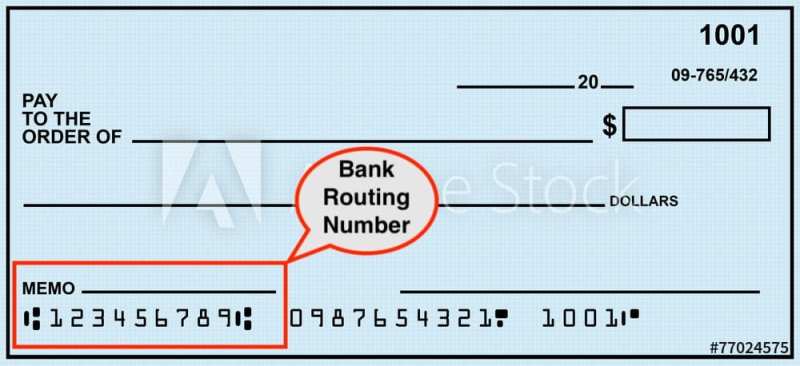
The confusion is understandable. Routing numbers aren’t printed on checks (unless you’ve opted into them), and Chase’s online tools bury them in layers of menus. A single typo—swapping digits 2 and 3, for example—can redirect funds to the wrong bank or trigger a fraud alert. Worse, using the wrong Chase routing number for international transfers can incur hefty fees or delay payments by weeks. The stakes are high, yet the information remains scattered across bank statements, mobile apps, and customer service scripts.
This guide cuts through the ambiguity. Whether you’re setting up a new employer direct deposit, splitting rent with roommates, or wiring funds abroad, you’ll learn how to locate your Chase routing number across all platforms, decode its structure, and troubleshoot common errors. We’ll also expose the hidden risks of misusing it—like why some transactions require a different Chase routing number entirely—and how to verify accuracy before hitting "Submit."
The Complete Overview of Chase Bank Routing Numbers
Chase’s routing numbers aren’t static; they vary by state, transaction type, and even account tier. The most commonly used Chase bank routing number (021000021) applies to personal accounts in most states, but business accounts, wire transfers, and certain regions (like New York or California) demand alternatives. This variability stems from the Federal Reserve’s 1913 mandate to assign unique identifiers to financial institutions—a system that evolved from paper-based clearinghouses to today’s real-time payment networks.
Understanding these nuances is critical. For instance, a Chase checking account holder in Texas might use 021000021 for domestic ACH transfers but 021030008 for wires. The discrepancy arises because different payment rails (ACH vs. Fedwire) require distinct routing paths. Even Chase’s own website occasionally directs users to outdated numbers, leading to failed transactions. The solution? Cross-reference your Chase routing number against the bank’s official routing table before initiating any transfer.
Historical Background and Evolution
The concept of routing numbers traces back to the 19th century, when regional clearinghouses manually matched paper checks to local banks. By the 1920s, the American Bankers Association standardized the format to nine digits, with the first four identifying the Federal Reserve district. Chase, as one of the oldest banks in the U.S. (founded in 1799), adopted this system early, though its routing numbers have shifted over time due to mergers—most notably the 2005 acquisition of J.P. Morgan, which consolidated routing assignments under a single Chase umbrella.
Today, the Chase bank routing number serves as a digital fingerprint for the institution. The Federal Reserve’s 2023 upgrade to the FedNow service—enabling instant payments—has further complicated routing logic, as some transactions now bypass traditional ACH networks. Meanwhile, Chase’s mobile app and online banking have streamlined access, but the underlying complexity remains. For example, the routing number 021000021 (used for most personal accounts) was last updated in 2018, yet Chase’s business accounts may still reference legacy numbers from predecessor banks like Bank One.
Core Mechanisms: How It Works
At its core, a routing number is a hierarchical code. The first four digits (0210) pinpoint the Federal Reserve district (Chase falls under the Cleveland Fed), while the next four (00021) identify the specific bank. The final digit is a checksum, calculated to detect typos. When you initiate a transfer, the payment system uses this number to route funds through the appropriate clearinghouse—whether it’s the Fed’s ACH network, a private processor like Visa Direct, or an international correspondent bank.
For Chase routing number lookups, the bank’s internal systems pull from a master table maintained by the American Bankers Association (ABA). This table is updated quarterly to reflect changes like branch closures or new account types. For instance, Chase’s premium accounts (e.g., Chase Sapphire) may use a different routing number for certain transactions, though the bank rarely advertises this publicly. The opacity forces customers to dig deeper—checking the back of a voided check (if available), navigating the app’s hidden settings, or calling customer service for the precise Chase bank routing number tied to their account.
Key Benefits and Crucial Impact
Routing numbers are the backbone of modern finance, enabling seamless transactions across 12,000+ U.S. banks. For Chase customers, the correct Chase routing number ensures direct deposits arrive on payday, bill payments clear without holds, and peer-to-peer transfers (via Zelle or Venmo) complete instantly. Without it, the financial system grinds to a halt—imagine payroll systems failing because HR entered the wrong nine digits. The impact isn’t just theoretical: A 2022 Federal Reserve study found that routing errors cost businesses $1.2 billion annually in delayed or lost funds.
Yet the benefits extend beyond efficiency. Routing numbers also enhance security. Each digit acts as a filter, preventing fraudsters from injecting funds into the wrong account. When you use the correct Chase bank routing number, the system cross-references it with your account number—a dual-layer verification that thwarts unauthorized transfers. However, this security hinges on accuracy. A single misplaced digit can trigger a "routing mismatch" error, leaving funds stranded in limbo for days or weeks.
"A routing number isn’t just a number—it’s the address of your money in the digital age. Get it wrong, and your payment might as well be sent to a black hole."
— Sarah Chen, former ACH operations manager at Wells Fargo
Major Advantages
- Instant verification: Using the correct Chase routing number allows real-time confirmation of transactions via services like Plaid or Yodlee, reducing disputes.
- Global connectivity: Chase’s routing numbers enable international wires through SWIFT, linking to correspondent banks worldwide (e.g., 021030008 for wires).
- Automated reconciliation: Businesses rely on routing numbers to auto-match payments with invoices, cutting manual work by 40%.
- Fraud deterrence: The checksum digit in Chase’s routing numbers (e.g., 021000021) flags typos before processing, saving customers from costly errors.
- Multi-account support: Chase’s routing table accommodates checking, savings, and business accounts, ensuring funds reach the right destination even within the same bank.

Comparative Analysis
While Chase’s routing numbers are among the most stable in the industry, other banks—especially those with regional branches—require more frequent updates. For example, Wells Fargo’s routing numbers vary by state, while Bank of America consolidates most transactions under 026009593. Below is a side-by-side comparison of how major banks handle routing assignments:
| Bank | Primary Routing Number (Personal Accounts) | Key Variations | Notes |
|---|---|---|---|
| Chase | 021000021 (Domestic ACH) |
|
Most stable; rare updates since 2018. |
| Wells Fargo | 121000248 (California) |
|
State-specific numbers require manual lookup. |
| Bank of America | 026009593 (Most states) |
|
Simpler than Chase but lacks granularity for wires. |
| Citibank | 021000021 (Shared with Chase) |
|
Overlaps with Chase; verify with Citi’s routing tool. |
Future Trends and Innovations
The next decade will redefine how routing numbers function. The Federal Reserve’s FedNow service, launched in 2023, allows instant payments using a simplified identifier—potentially reducing reliance on traditional routing numbers for domestic transactions. Meanwhile, Chase is testing blockchain-based settlement systems, where smart contracts could replace routing logic entirely. These shifts threaten to obsolete the nine-digit code, but for now, the Chase bank routing number remains non-negotiable for ACH, wires, and international transfers.
Regulatory changes are also on the horizon. The Consumer Financial Protection Bureau (CFPB) is exploring mandates for "dynamic routing" numbers—codes that update in real time to prevent fraud. Chase may adopt this for high-risk transactions (e.g., large wires), forcing customers to generate temporary routing numbers via the app. Until then, the bank’s current system will persist, but the underlying infrastructure is poised for disruption. For now, memorizing—or at least bookmarking—your Chase routing number is still the safest bet.

Conclusion
The Chase bank routing number is more than a sequence of digits; it’s a critical link in the financial ecosystem. Whether you’re a freelancer waiting for client payments or a business processing payroll, its accuracy directly impacts your cash flow. The good news? Locating it has never been easier—Chase’s app, website, and even customer service can provide the correct digits in seconds. The bad news? The wrong number can derail transactions before they even start.
As payments evolve, staying ahead means understanding the nuances: why your wire might need 021030008 while your direct deposit uses 021000021, or how to verify a routing number before hitting "Send." The systems may change, but the principle remains: precision is non-negotiable. Bookmark this guide, and the next time you’re asked for your Chase routing number, you’ll have the right answer—every time.
Comprehensive FAQs
Q: Where can I find my Chase routing number online?
A: Log in to your Chase online banking account, navigate to "Account Settings," and select "Routing and Account Numbers." Alternatively, use the Chase mobile app: go to your account summary, tap the three dots (⋮), and choose "Show Routing Number." For business accounts, contact Chase Business Customer Service at 1-800-935-9935.
Q: Does Chase have different routing numbers for checking vs. savings accounts?
A: No. Chase uses the same routing number (021000021) for both checking and savings accounts in most states. However, business accounts or certain premium tiers may require a different number for wires—always verify with Chase’s routing table or customer service.
Q: Why did my direct deposit fail even though I used the correct Chase routing number?
A: Common causes include:
- Incorrect account number (even one transposed digit can fail the transaction).
- Employer using an outdated Chase routing number (e.g., a legacy Bank One number).
- Bank holidays or processing delays (ACH transfers can take 1–3 business days).
- Insufficient funds or account restrictions (e.g., a closed or frozen account).
Q: Can I use Chase’s routing number for international transfers?
A: No. International wires require Chase’s SWIFT/BIC code (CHASUS33), not the standard routing number. For outgoing transfers, use 021030008 (Chase’s wire routing number) and include the recipient’s SWIFT code. Incoming wires should specify your account number and the correct Chase routing number for the destination state.
Q: How do I find my Chase routing number if I don’t have online access?
A: Call Chase Customer Service at 1-800-935-9935 and provide your account number for verification. Alternatively, visit a Chase branch with a valid ID to request a copy of your account details, which may include the routing number. For business accounts, use the dedicated line: 1-800-432-1212.
Q: What should I do if I accidentally use the wrong Chase routing number?
A: Act immediately:
- Contact the recipient’s bank to request a recall (if the funds haven’t cleared).
- File a dispute with Chase if the transfer was unauthorized.
- Monitor your account for unauthorized debits and report fraud to 1-800-432-3117.
- For ACH errors, submit a claim via Chase’s online dispute portal within 60 days.
Q: Are there any fees for using Chase’s routing number?
A: No. Using your Chase bank routing number for domestic ACH transfers (e.g., direct deposits, bill payments) is free. However, international wires or same-day ACH transfers may incur fees:
- Outgoing wire: $50 (domestic), $60 (international).
- Same-day ACH: $25 per transaction.
- Foreign transaction fees: 3% of the amount (for debit/credit card payments).
Q: Can I change my Chase routing number?
A: No. Routing numbers are assigned by the Federal Reserve and cannot be altered by the account holder. If you’ve moved to a new state or opened a business account, Chase will provide the correct routing number for your location. For international transfers, use the appropriate SWIFT code instead.
Q: How often does Chase update its routing numbers?
A: Routing numbers are updated infrequently—typically every 5–10 years—unless Chase merges with another bank (e.g., the 2005 J.P. Morgan acquisition). Always verify the latest number via Chase’s official routing table or your account settings before initiating a transfer.
Leave a Comment
Comments are moderated before appearing. The data you submit is processed according to the Privacy Policy of Vetlife Archive.